


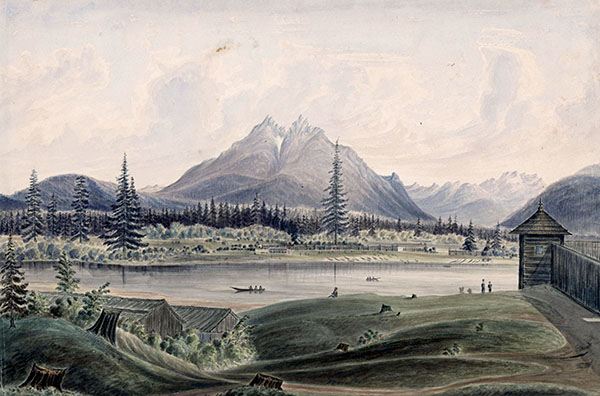
Caption: Landscape around Fort Langley, 1858.


The Hudson’s Bay Company (HBC) built Fort Langley 30 kilometres up the Fraser River, where Derby Ranch is today. The company tried to convince the Stó:lō people to trap furs, but the Stó:lō chose to keep their traditional salmon trade. Because of this, Fort Langley became mainly a salmon trading post.
(Image 102278830 courtesy of U.S. National Archives)
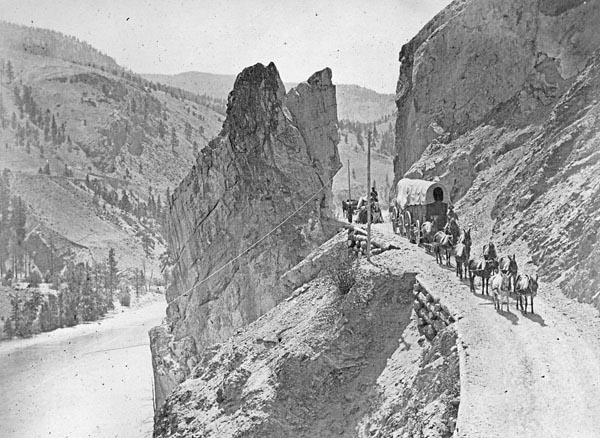
Caption: Wagons on the Cariboo Road near Yale, circa 1870s.
More than 30,000 miners came to Stó:lō Temexw (Stó:lō territory) looking for gold. Tensions grew between the Stó:lō and the newcomers. Small acts of violence turned into organized attacks by American soldiers against the Stó:lō people. Fighting broke out in the Fraser Canyon. When fall and winter came, hundreds of miners became sick with malnutrition and scurvy, and the Stó:lō helped them by giving them food.
(Image C-008077 courtesy of Library and Archives Canada)
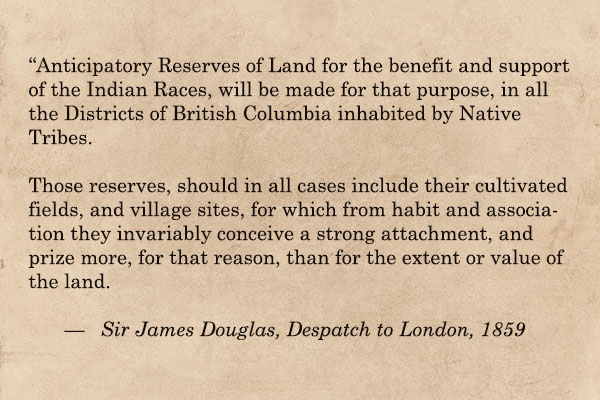
In response to protests by the Stó:lō people over the actions of gold miners, Governor Douglas promised to protect certain lands as exclusively belonging to the Stó:lō people. He began the creation of the reserve system.
(Quote taken from Despatch to London CO 60:4, no. 4800, 212)
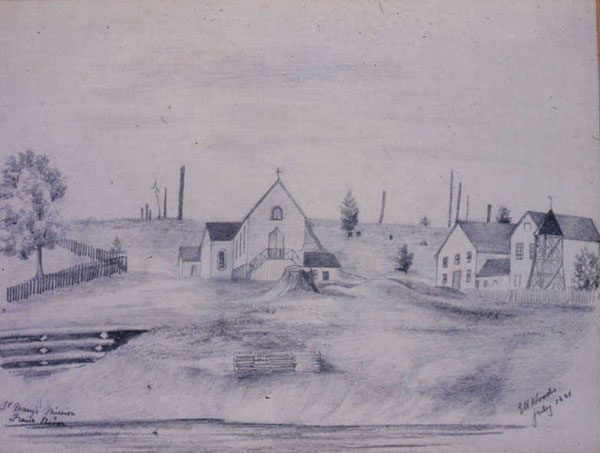
Caption: St. Mary's Mission, 1881.
Governor Douglas introduced a policy called “benevolent assimilation” for Indigenous people. Like many colonists at the time, he believed that Indigenous people would eventually become like Europeans. He thought that if they kept their traditional culture, they would become extinct. The first permanent Roman Catholic missionaries from the Oblates of Mary Immaculate (OMI) arrived this year and tried to force the Stó:lō people to give up their way of life and spiritual practices. These missionaries went on to create St. Mary’s Residential School, and played a major role in the cultural genocide of the Stó:lō people.
(Image taken from PDP01616 courtesy of BC Archives)
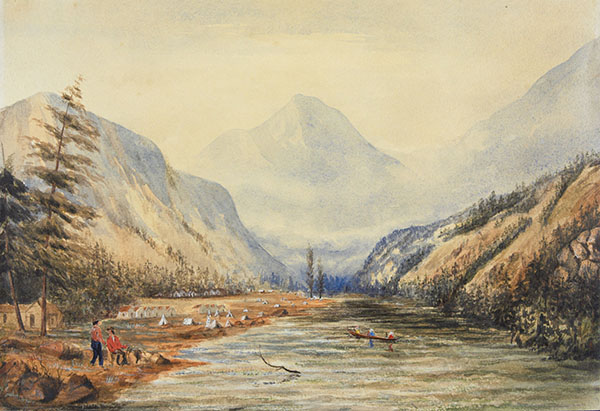
Caption: British Marines camp in the Fraser Canyon, 1859.
More than 3/4 of the gold miners who came for the Gold Rush leave Stó:lō Temexw. They left behind a legacy of disease, alcohol use and violence.
(Image 1989-171-29 courtesy of Library and Archives Canada)
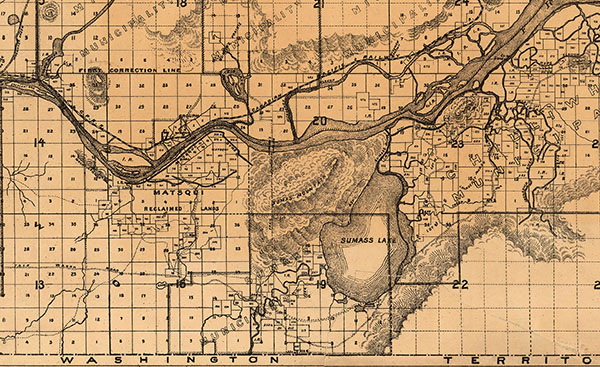
Caption: Map of the central Fraser Valley showing the grid used by the pre-emption system, 1892.
At this time, pre-emption was the way for people to claim land in B.C. If someone wanted ownership over a parcel of Crown land, it could be granted to them if they “improved” it by farming or building businesses. This system started in 1859 and became official in 1870.
(Image taken from MAP 446 courtesy of City of Vancouver Archives)
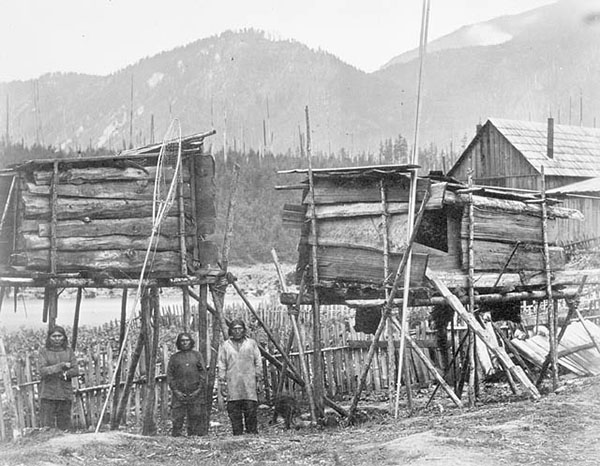
Caption: Indigenous fishers pose with their dried salmon caches near the Fraser River, ca. 1870.
A new system of exchanging money for work, known as a wage economy, began to emerge in Stó:lō Temexw. With their specialized skills and knowledge, the Stó:lō people were favoured employees. They received high wages in exchange for their work and expertise.
(Image C-024288 courtesy of Library and Archives Canada)
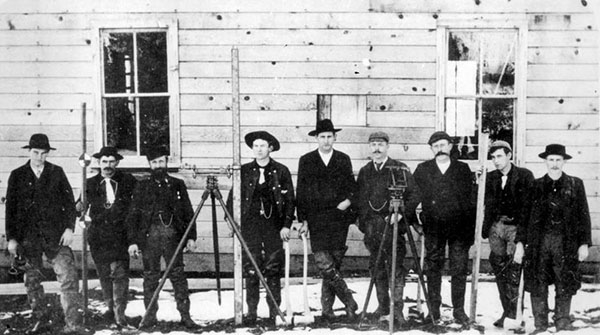
Caption: Sumas Prairie Surveyors, 1893.
Governor James Douglas led the Stó:lō people to believe that treaties would be signed to protect their lands. At the same time, settlers started arriving from Britain. Douglas had promised them good, cheap farmland in the Fraser Valley. The settlers chose the land they wanted and began building homes and clearing fields.
(Image D-01074 courtesy of BC Archives)
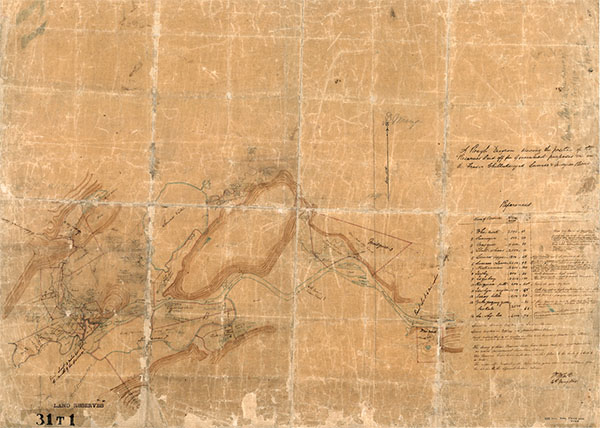
Caption: Map of the original reserves in the lower Fraser Valley, 1864.
Governor Douglas did not get enough money together to pay for treaties with the Stó:lō, so he decided to delay the treaty process. He started setting up reserves under the guidance of Stó:lō leaders. However, before the reserves could be officially registered, Douglas retired.
(Image taken from 31T1LR courtesy of University of Victoria Library)
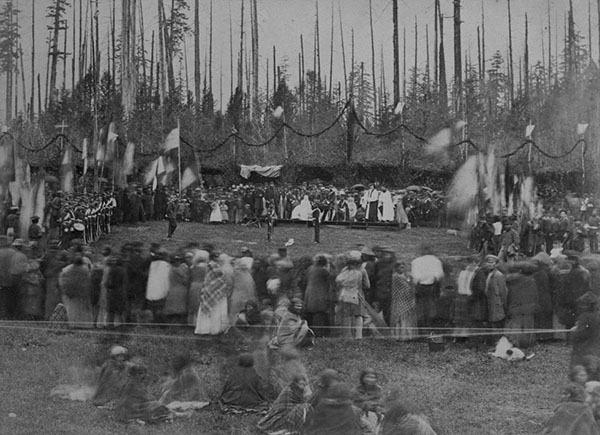
Caption: A group of Indigenous people meet with Governor Seymour's wife in 1867.
Unhappy with the situation, the Stó:lō people made a speech to the new governor, Frederick Seymour. They gave him a written petition asking that their reserve lands and rights be protected by the government. Seymour promised to respect the boundaries set during Governor Douglas’s time. But later, he gave in to pressure from settlers and land speculators and allowed more land to be opened for settlement.
(Image C-088942 courtesy of Library and Archives Canada)
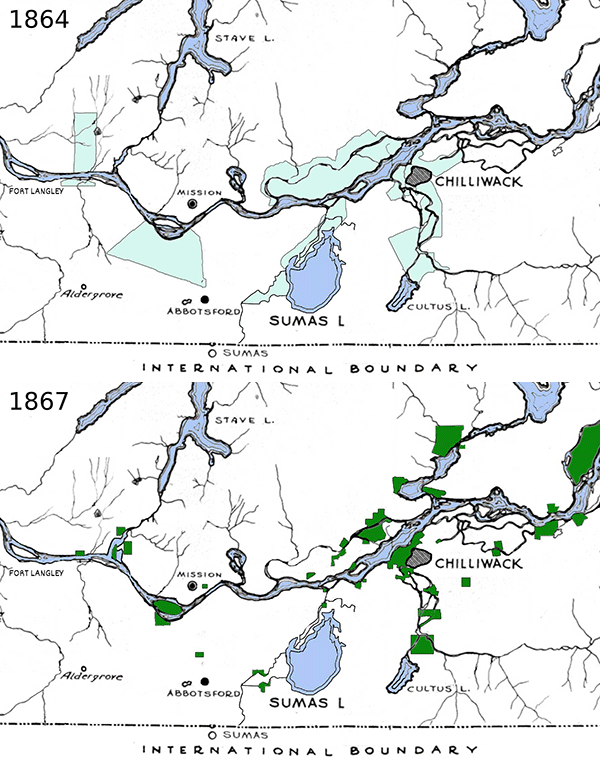
Caption: Map showing the reduction in reserves from 1864 to 1867.
Joseph Trutch, the Commissioner of Lands and Works, refused to recognize the original reserves created between Governor James Douglas and Stó:lō leaders. He denied the existence of Aboriginal Title, and had the reserves resurveyed. The boundaries were reduced by 91 percent without the consent of the Stó:lō people.
(Image taken from Seelkee, CC BY-SA 4.0, via Wikimedia Commons)
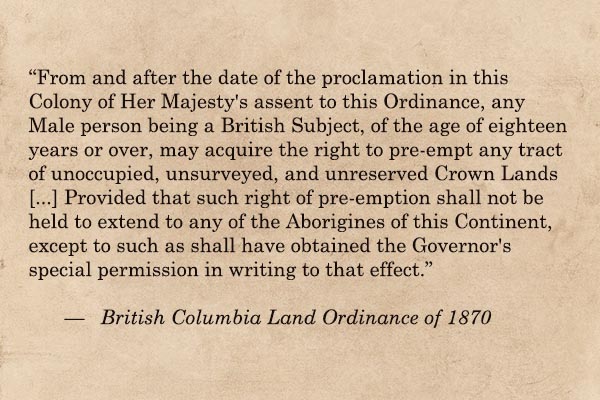
The British Columbia colonial government passed a law that stopped Indigenous people from pre-empting land without special permission. It also prevented them from buying land from settlers. Indigenous families were given much less land per family than settler families received.
(Quote taken from the BC Land Ordinance of 1870)
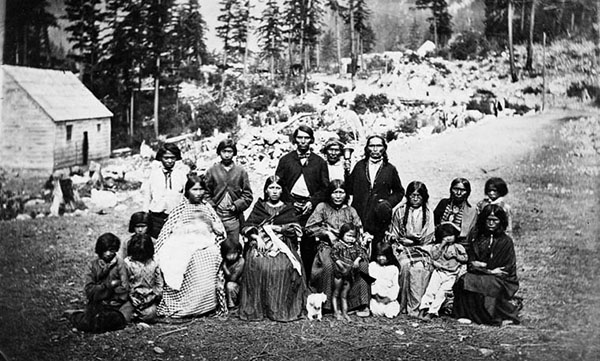
Caption: Indigenous group at Boston Bar, 1863–1867.
As their reserve lands were shrunk and access to traditional resources restricted, the Stó:lō people adapted to the new colonial economy. Families started using settler farming methods, but they could not grow many cash crops because their lands were smaller and less fertile. Floods often ruined their harvests, so some people began raising cattle instead. Wage labour and activities like berry-picking helped families survive through the year.
(Image C-088948 courtesy of Library and Archives Canada)
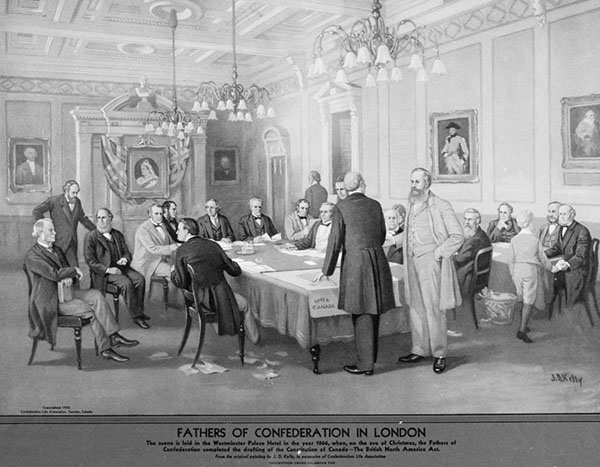
Caption: Meeting of the Fathers of Confederation in London, drawn in 1935.
The crown colonies of Vancouver Island and British Columbia combined and became the 6th province of Canada, with Victoria as the capital city. The federal government took over Britain's commitments to Indigenous peoples.
(Image D-05642 courtesy of BC Archives)
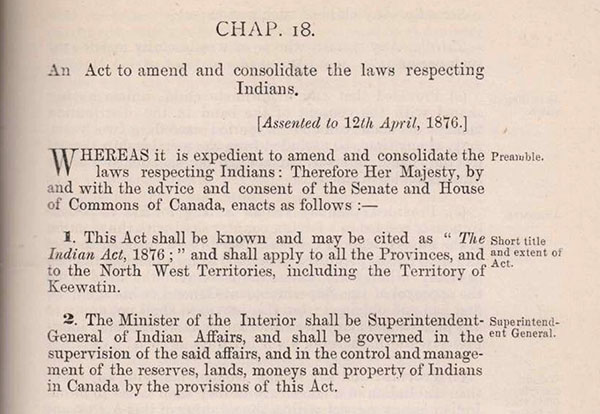
Caption: Excerpt from the 1876 Indian Act.
The Canadian government introduced the Indian Act into law. This law is still used today to manage First Nations and their reserves. It gave the government the power to determine who was or wasn’t Indigenous through the system of “Indian” status. The act stopped Indigenous people with this status from voting, took away the power of communities to govern themselves, and banned religious and cultural ceremonies. The law was meant to control Indigenous peoples by forcing them to adopt settler culture and forget their own.
(Image courtesy of National Centre for Truth and Reconciliation)
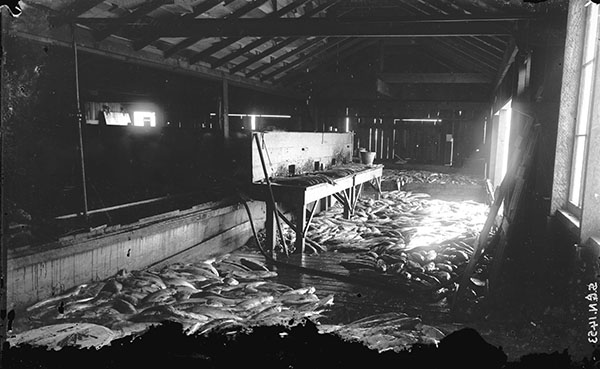
Caption: Interior of a Salmon Cannery, 1890s.


Starting in the 1880s, settlers began opening canneries on the Fraser River. These canneries caught and packed fish to be sold around the world. Many Stó:lō families found work at the canneries, with men doing the fishing and women and older children processing the salmon. Japanese and Chinese labourers were also employed to process fish at the canneries. Work was segregated by race and supervised by white management.
(Image SGN 1453 courtesy of City of Vancouver Archives)
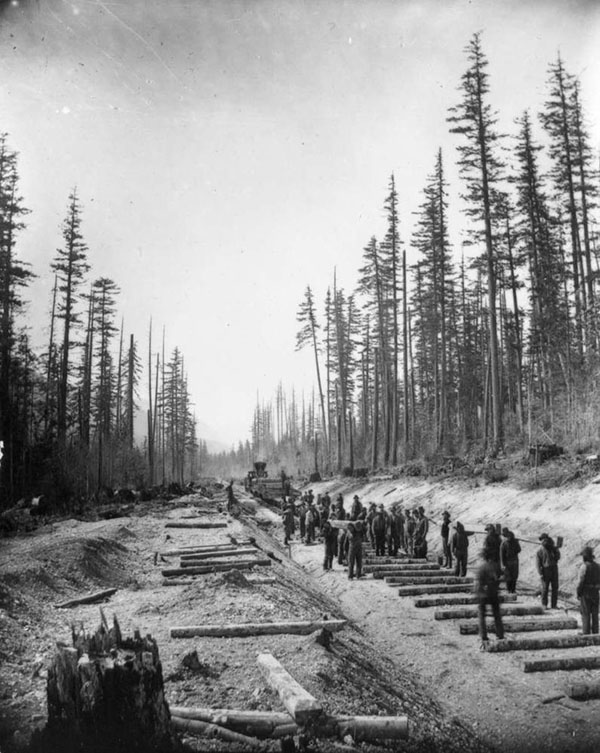
Caption: Men laying railway ties through the Fraser Valley, circa 1881–1883.
The Canadian Pacific Railway (CPR) began running through the Fraser Valley. Travel became much easier, and many European settlers moved into Stó:lō Temexw. Many of the Chinese immigrants who had helped build it moved to cities and towns to find work. Some settled in growing communities along the railway. Many opened restaurants, stores, or laundry businesses, while others became farmers. Employers started hiring Chinese workers for low pay in jobs that Stó:lō people used to do. This was unfair because it took advantage of Chinese workers and lowered wages for Stó:lō workers.
(Image A-07021 courtesy of BC Archives)
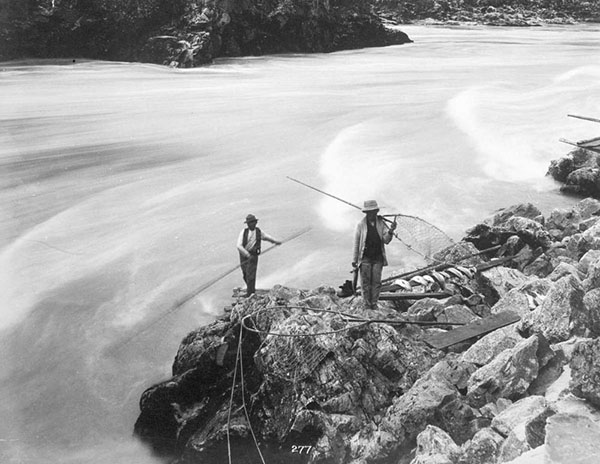
Caption: Stó:lō fishers catch salmon with nets, circa 1880s.
Because commercial overfishing was destroying salmon runs, the government banned the sale of fish caught in non-tidal waters without a license. Stó:lō fishers were not given these licenses, which meant they could not legally run their own commercial fishing businesses.
(Image A-06077 courtesy of BC Archives)
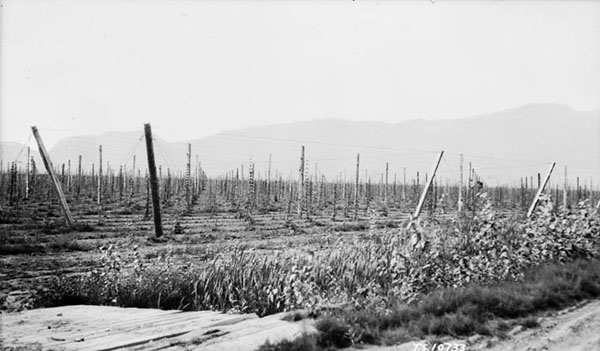
Caption: Hop field on Sumas Prairie, 1926.
Farmers in the Fraser Valley began growing hops, which provided seasonal work for Stó:lō workers. Both white and Stó:lō workers were hired to pick hops, but groups worked on different fields and didn’t mix very much. All pickers were paid the same, no matter what race, age, or gender they were. Hops-picking continued to be important to the Stó:lō economy until machines replaced human workers in the 1950s.
(Image PA-020110 courtesy of Library and Archives Canada)
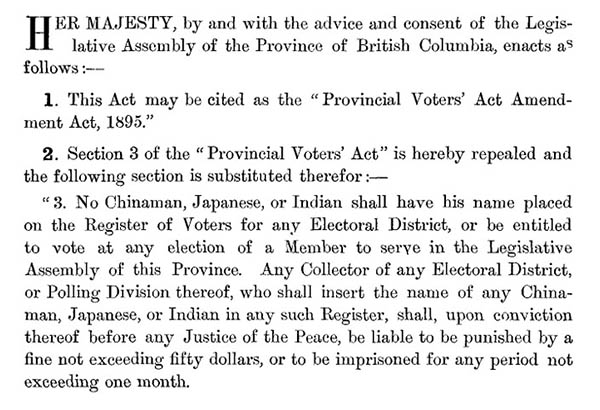
Caption: Excerpt from the Provincial Voter's Act of 1895.
Japanese and Chinese Canadians were no longer allowed to vote in local, provincial, or federal elections. This rule lasted into the 1940s. Only a small number of Japanese Canadian soldiers from the First World War were allowed limited voting rights. The 1895 amendment to the Provincial Voters' Act also banned Indigenous people from voting in Provincial elections (in addition to the federal voting ban introduced by the Indian Act in 1876).
(Image courtesy of BC Laws at gov.bc.ca)
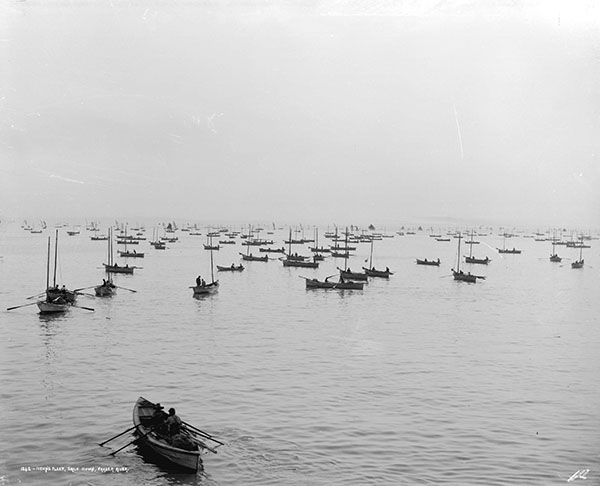
Caption: Fishing fleet on the Fraser River, 1903.
Salmon runs continued to shrink, and work dried up at the canneries. Alarmed, Stó:lō leaders wrote a letter to the leader of the Department of Indian Affairs with their concerns about overfishing. Concerns about the fisheries would continue to be brought up by the Stó:lō for decades.
(Image CVA 137-91 courtesy of City of Vancouver Archives)
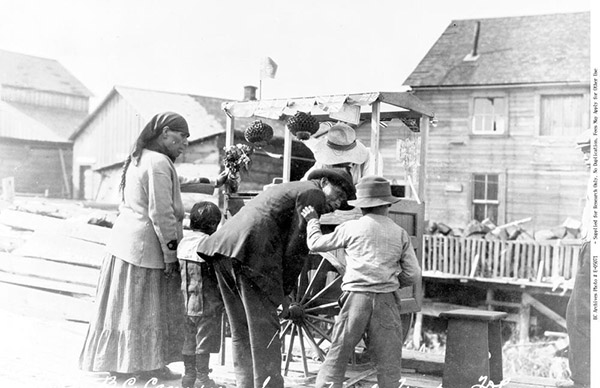
Caption: Indigenous family of cannery workers inspects a merchant's stall, 1913.
Stó:lō families continued to farm, starting kitchen gardens and producing beef and milk for market. Most continued a seasonal way of life by fishing and berry-picking in the spring and summer and picking hops and harvesting crops in the fall. Wage labour was increasingly important, but Stó:lō workers were paid less than white settlers for their work.
(Image E-05071 courtesy of BC Archives)
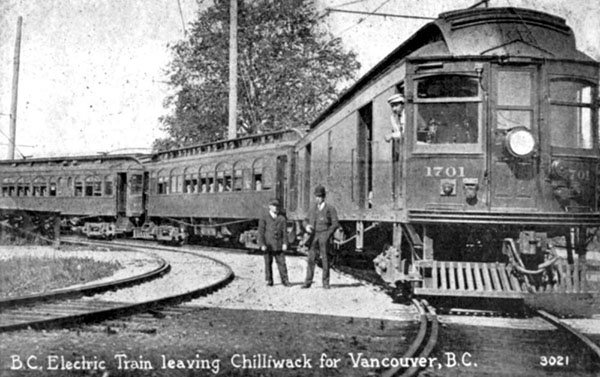
Caption: BCER Train on the Chilliwack-Vancouver line, 1910s.


Many new railways were built in Abbotsford, such as the Great Northern Railway, the Canadian National Railway, and the B.C. Electric Railway. These railways helped the lumber and dairy industries grow because they could now ship products quickly to cities like Vancouver. The Mill Lake lumber mill became one of the area’s most important businesses.
(Image E-00487 courtesy of BC Archives)
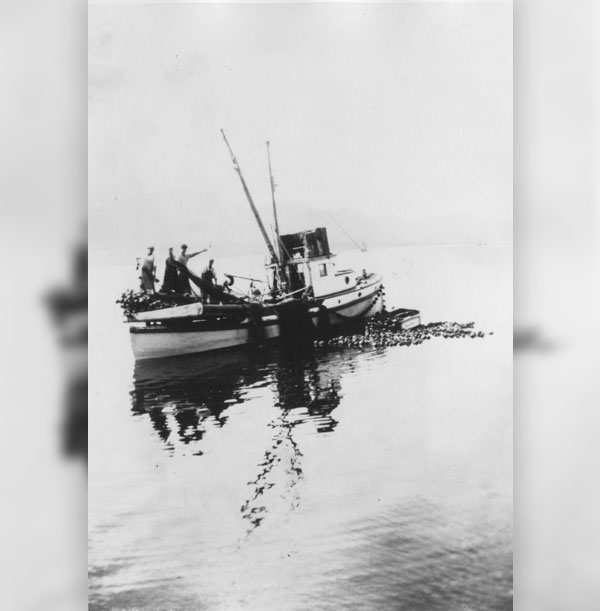
Caption: Japanese Canadian fishermen work on a fishing trawler.
After many years of low salmon returns, the Government banned all fishing on the Fraser River. Many Stó:lō people had to get other work picking berries, fruit, and other cash crops in Mission.
(Image 2001.04.138 courtesy of the Nikkei National Museum & Cultural Centre)
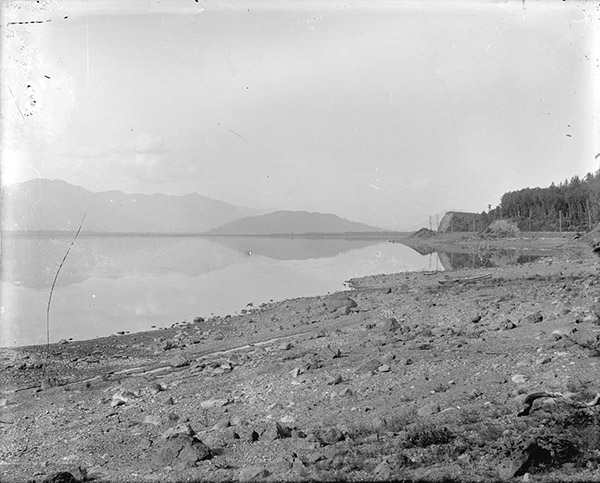
Caption: Sumas lake before it was drained, circa 1913.
In 1922, the provincial government formally decided to drain Sumas Lake, giving the contract to the Marsh Construction Company. By 1926 the work was completed, allowing farmers to settle the new Sumas prairie. The loss of the lake was devastating to the Semá:th people, whose original reserve was largely the lake itself. It was a source of food and a way of life, and it was a habitat for many birds, animals, and fish. The Stó:lō people were not consulted on the project, and the Semá:th were not compensated.
(Image LGN 1144 courtesy of City of Vancouver Archives)
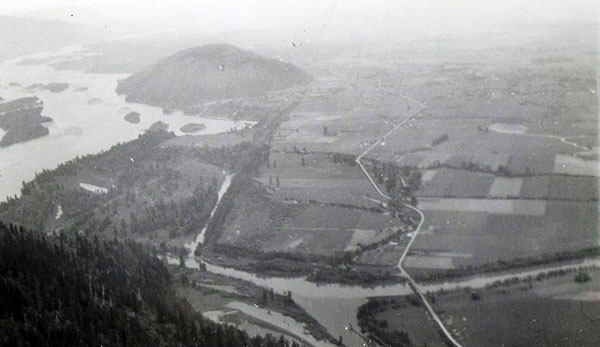
Caption: Aerial view from Sumas Mountain showing the Interprovincial highway running east to west over the Vedder Canal, circa 1940s.
In 1931, the first part of the Trans-Canada Highway in the Fraser Valley opened on Sumas Prairie. By 1941, the route from Clearbrook to Vancouver was complete. Trucking companies—mostly owned by white settlers at first—began moving goods by road. This made the railways less important to the local economy.
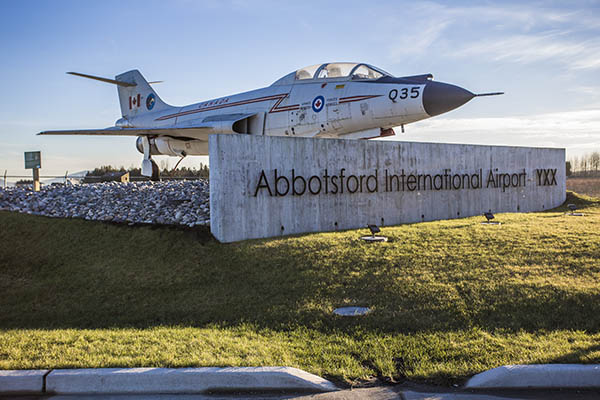
Caption: Entrance to the Abbotsford International Airport.
During World War II, an airport was built in Abbotsford to help defend the west coast. It opened on July 14, 1943, and became Canada’s biggest military airport, with more than forty buildings. The Royal Canadian Air Force Station closed in 1945, and the airport became civilian-run in 1958. In 1997, the City of Abbotsford bought it from the federal government, and it still operates today as Abbotsford International Airport.
(Image by YXXOps, CC BY-SA 4.0, via Wikimedia Commons)
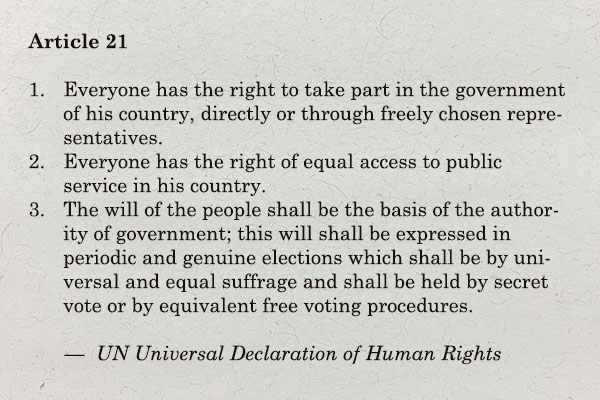
Canada signed on to the United Nations' Universal Declaration of Human Rights. Following this, the B.C. government finally allowed Indigenous people the right to vote. In 1951 the Indian Act was amended so that Indigenous people could vote federally without giving up their Indigenous status.
(Quote taken from Article 21 of the UN Universal Declaration of Human Rights)
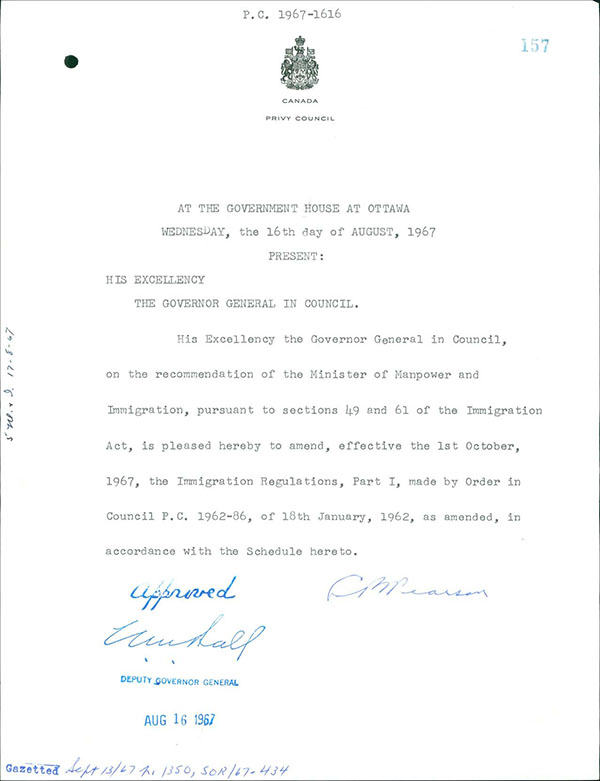
Caption: Order in Council amending immigration policy, 1967.

In 1962, Canada ended its system that set limits based on a person’s country of origin. In 1967, a new point system was created to decide who could immigrate, attempting to make Canada’s immigration rules fairer and less racist. However, the points system gave preference to workers with skills and education, instead of farmers and labourers who came from less privileged backgrounds.
("Immigration Act, Immigration Regulations, Part 1, Amended" courtesy of Library and Archives Canada via the Canadian Museum of Immigration at Pier 21)