


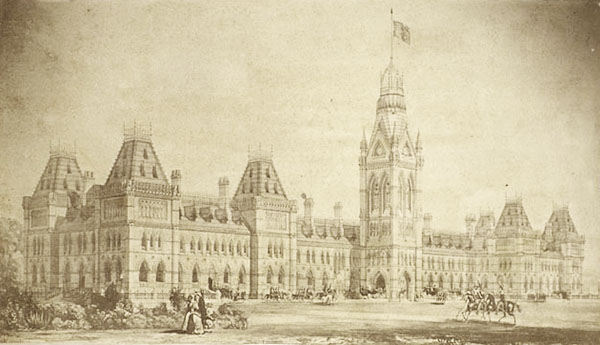
Caption: Canadian Parliament buildings circa 1870.


The Canadian Government wanted more settlers in the west to stop the United States from expanding north. They created the Immigration Act, opening offices in the United Kingdom and promising safe travel to people who wanted to move to Canada. Immigrants from Europe were preferred, but people of all backgrounds could come.
(Image Acc. No. 1970-190-4 courtesy of Library and Archives Canada)
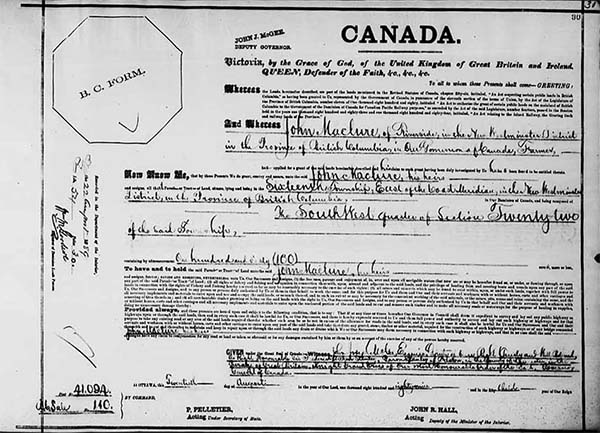
Caption: Western Land Grant in the Name of John Maclure, 1889.

In 1872, the Dominion Lands Act launched the Dominion Lands Survey, a massive project which helped map out the western provinces. It allowed male settlers over the age of 21 to claim 65 hectares of land for $10. This encouraged more European settlers to move west.
(Image courtesy of Library and Archives Canada)
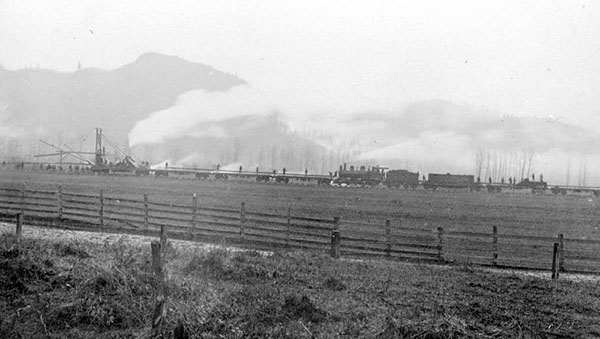
Caption: Train travels through Matsqui Prairie, circa 1912.
In 1889, an additional Canadian Pacific Railway line from Mission to the U.S. border was built. John Cunningham Maclure, a former Royal Engineer, pre-empted the land that would become downtown Abbotsford because he knew it was the best spot to build the railway. The station built there was named “Abbotsford” after Harry Abbot, a CPR superintendent.
(Image E-00487 courtesy of BC Archives)
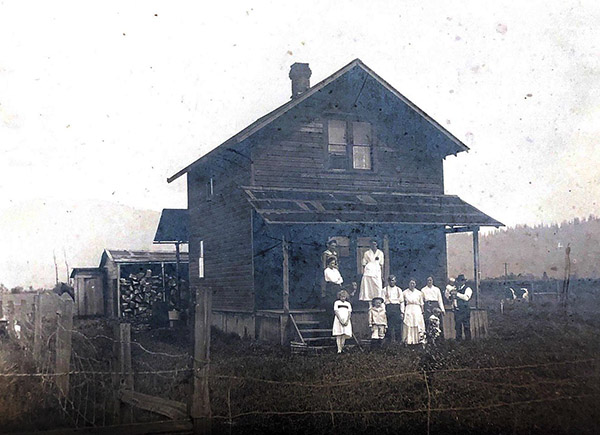
Caption: Swedish Canadian Poignant family on their homestead, circa 1917.
In the 1890s, life in Scandinavia was becoming harder. In Sweden and Norway, mandatory military service became longer. There was an economic slump, and workers felt growing pressure. Many families started looking for a better life. At the same time, more people were moving to North America. Canada had jobs and land available for settlers, which, gave Scandinavian families a reason to leave their homelands.
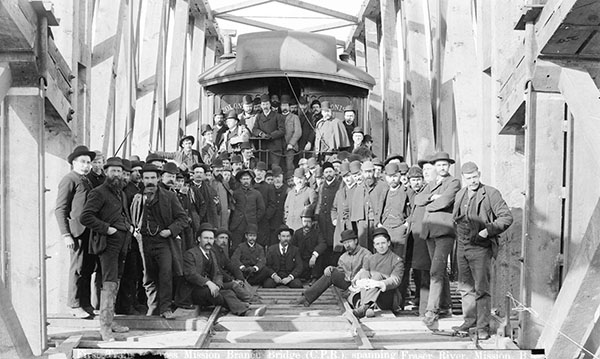
Caption: First train to cross the Mission Bridge in 1891.
In 1891 the Mission Railway Bridge opened between Mission and Matsqui. This was only the second bridge over the Fraser River and the only railway connection to the US at the time. Because travel was easier, Matsqui Prairie became more attractive place for European settlers to live.
(Image Out P45 courtesy of City of Vancouver Archives)
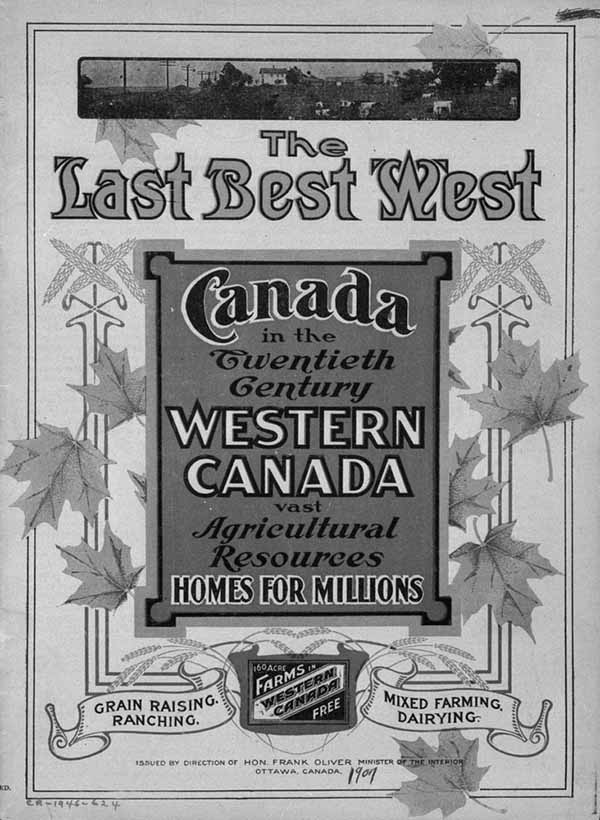
Caption: 1907 pamphlet from the Government of Canada advertising "The Last Best West".
In 1898 the Canadian government began actively promoting the western provinces as “The Last Best West”. Agents travelled to Scandinavia, while ads placed in Scandinavian-language newspapers in the United States encouraged people to move north. Magic lantern shows, newspaper stories, and letters home painted a picture of a promising new life in Western Canada. By this time, most good homesteading land in the United States had already been claimed, so many Scandinavian families crossed the border in search of a new beginning.
(Image C-030621 courtesy of Library and Archives Canada)
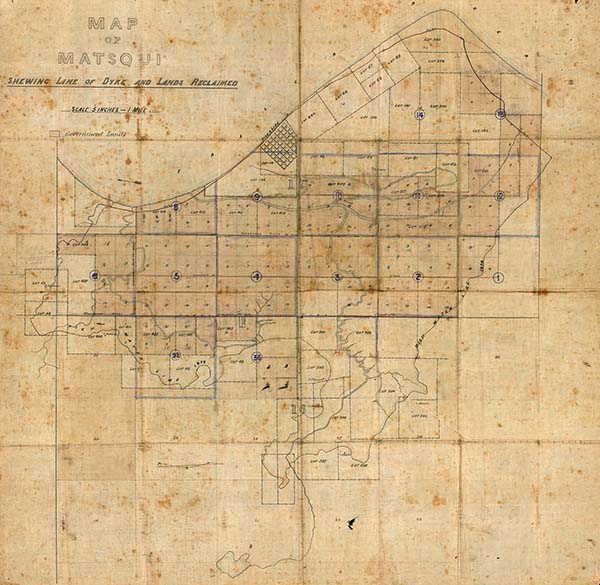
Caption: Map of the Matsqui Dykes along the Fraser River.
As settlers moved to Stó:lō Temexw, they wanted to shape the land to suit their needs. Matsqui Prairie was a desirable place to settle, but it had a problem: despite previous efforts, it continued to flood every year. Alexander Cruikshank was hired by the Matsqui Lands Company. He began recruiting Scandinavian families to help rebuild the dykes needed to make the land farmable.
(Map courtesy of Library and Archives Canada)
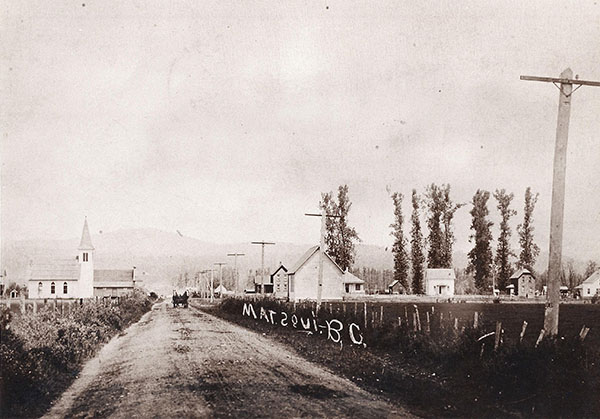
Caption: Riverside Road in Matsqui Village circa 1910.
Changes to the Dominion Lands Act allowed settlers to form cooperative communities. Groups of settlers could now live close together. This helped Scandinavian families support each other and build close communities. They created Matsqui Village, which became the commercial centre of Matsqui Prairie.
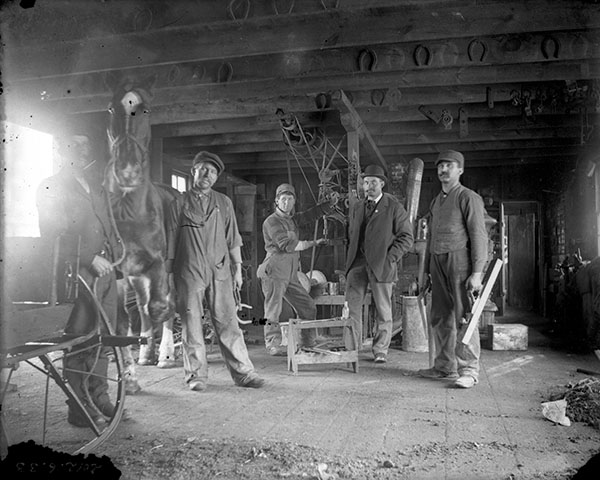
Caption: Interior of Matsqui's blacksmith shop circa 1903-1905.
Between 1899 and 1904, Cruikshank helped bring at least eighteen Swedish families to the area. New farms and homes were quickly built. He offered people jobs, land, and a chance to start fresh. Abbotsford received many Scandinavian settlers from places like Illinois, Minnesota, North Dakota and Washington State. Most of them settled in Matsqui Village, Ridgedale, and Gifford. Within just five years, Matsqui Village had two churches, a school, a post office, a general store, and a blacksmith shop.
(Image 2012.6.3b from Heritage Abbotsford Society)
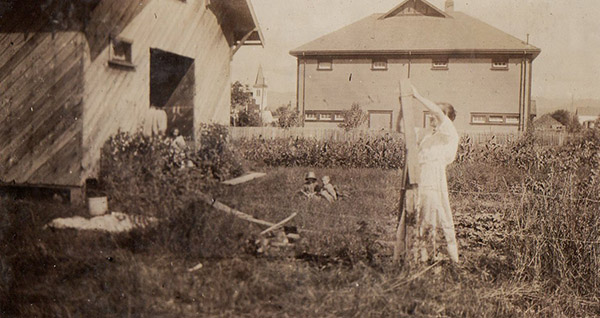
Caption: Yard of Emma Carlson's house, Matsqui Village.
By 1904, Scandinavian merchants were supplying goods to local farmers and workers, and Matsqui Village had become the bustling heart of prairie life. Many settlers moved from place to place to find the best land. Most of the first arrivals were men, alone or with a friend. They found work, built small homes or rented rooms until they felt secure enough to send for their families. A few women came on their own and worked by sewing clothes, running small photography studios, or working as hired help on farms. Some settlers, like the Olund and Flodin brothers, became known for their excellent building skills. They helped build many of Abbotsford’s first homes and businesses while also working on their own farms, shaping the physical landscape.
(Image 2019.1.975 from Heritage Abbotsford Society)
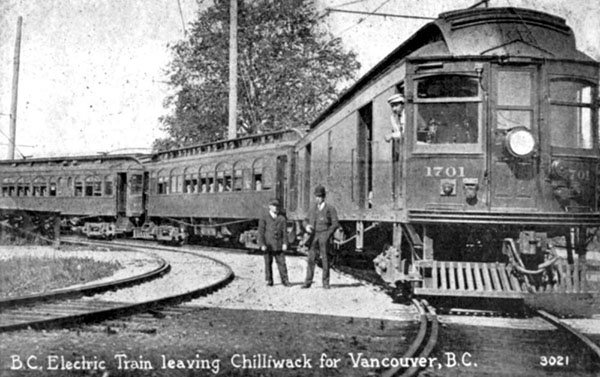
Caption: BCER Train on the Chilliwack-Vancouver line, 1910s.

Many new railways were built in Abbotsford, such as the Great Northern Railway, the Canadian National Railway, and the B.C. Electric Railway. These railways helped the lumber and dairy industries grow because they could now ship products quickly to cities like Vancouver. The Mill Lake lumber mill became one of the area’s most important businesses.
(Image E-00487 courtesy of BC Archives)
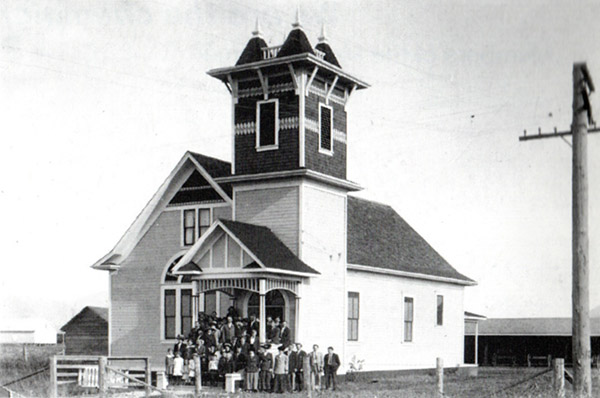
Caption: Matsqui Baptist Church circa 1910s.
In the 1910s, the Scandinavian community in Abbotsford continued to grow. A second general store opened in Matsqui Village, followed by telephone offices, a community hall, a hotel, a Baptist church, and a bank. Many of these places would later grow into successful companies and organizations.
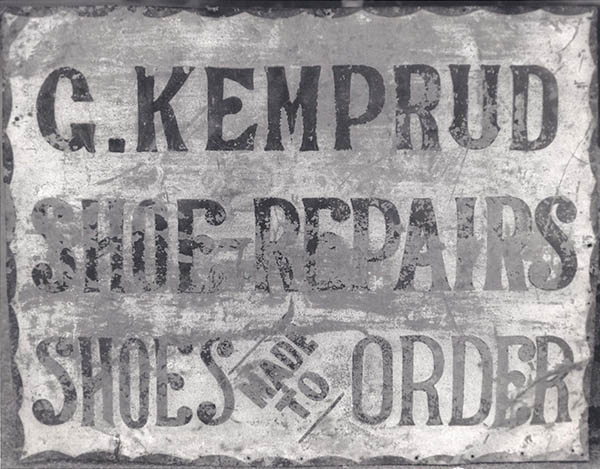
Caption: Sign for G. Kemprud's Shoe Repairs, a Matsqui business from the early 1900s.
The 1920s brought new businesses and forms of entertainment to the community. Scandinavians opened the first restaurant and an ice cream shop in Matsqui. The Matsqui Hotel also became an important place where different services were located, including a dressmaking shop, a pool hall, and public baths.
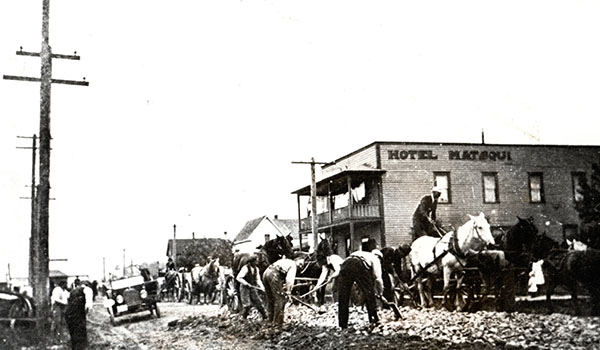
Caption: Men grading the road outside Hotel Matsqui, circa 1935.
By the 1930s the children of Scandinavian settlers felt Canadian, but they were still proud of their family background. Even if they were born in Canada, many still called themselves Swedish or Norwegian. During the Great Depression, many Scandinavian men worked paving roads in Abbotsford, which helped support their families with important income. Immigration from Scandinavia also slowed down during this time.
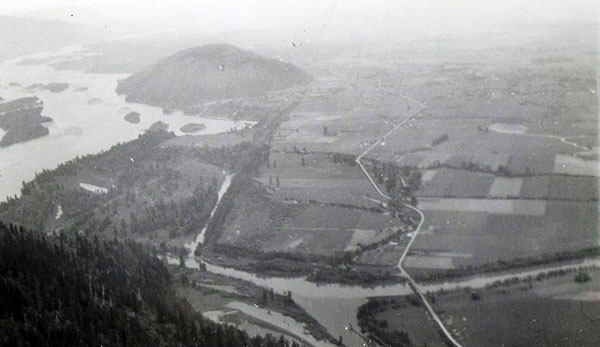
Caption: Aerial view from Sumas Mountain showing the Interprovincial highway running east to west over the Vedder Canal, circa 1940s.
In 1931, the first part of the Trans-Canada Highway in the Fraser Valley opened on Sumas Prairie. By 1941, the route from Clearbrook to Vancouver was complete. Trucking companies—mostly owned by white settlers at first—began moving goods by road. This made the railways less important to the local economy.

Caption: Entrance to the Abbotsford International Airport.
During World War II, an airport was built in Abbotsford to help defend the west coast. It opened on July 14, 1943, and became Canada’s biggest military airport, with more than forty buildings. The Royal Canadian Air Force Station closed in 1945, and the airport became civilian-run in 1958. In 1997, the City of Abbotsford bought it from the federal government, and it still operates today as Abbotsford International Airport.
(Image by YXXOps, CC BY-SA 4.0, via Wikimedia Commons)
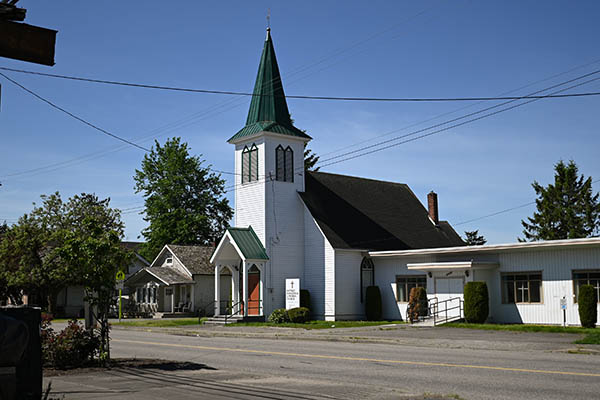
Caption: Matsqui Lutheran Church.
By the mid-20th century, Scandinavian settlers had become an important part of Abbotsford’s identity. Their farms, businesses, buildings, and traditions helped shape the growth of early Abbotsford. Their legacy continued not only in the buildings and the community organizations they created, but also in the families who remained in the area for generations.
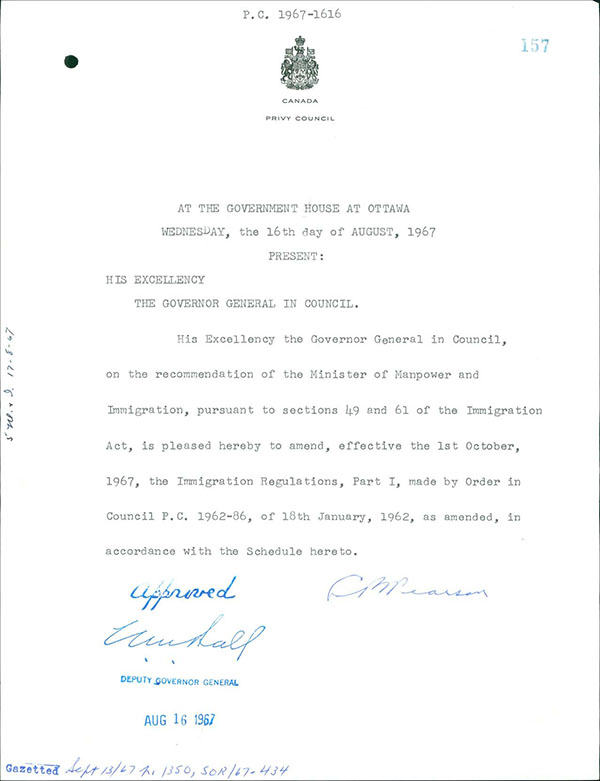
Caption: Order in Council amending immigration policy, 1967.

In 1962, Canada ended its system that set limits based on a person’s country of origin. In 1967, a new point system was created to decide who could immigrate, attempting to make Canada’s immigration rules fairer and less racist. However, the points system gave preference to workers with skills and education, instead of farmers and labourers who came from less privileged backgrounds.
("Immigration Act, Immigration Regulations, Part 1, Amended" courtesy of Library and Archives Canada via the Canadian Museum of Immigration at Pier 21)