


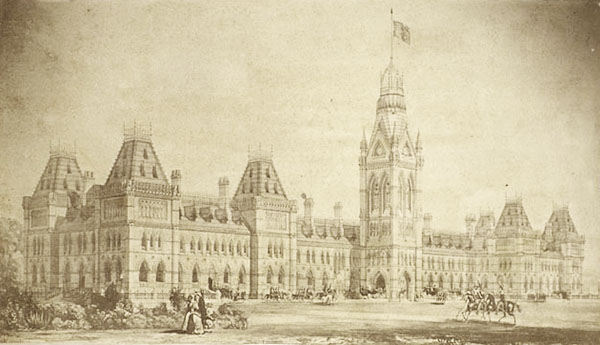
Caption: Canadian Parliament buildings circa 1870.


The Canadian Government wanted more settlers in the west to stop the United States from expanding north. They created the Immigration Act, opening offices in the United Kingdom and promising safe travel to people who wanted to move to Canada. Immigrants from Europe were preferred, but people of all backgrounds could come.
(Image Acc. No. 1970-190-4 courtesy of Library and Archives Canada)
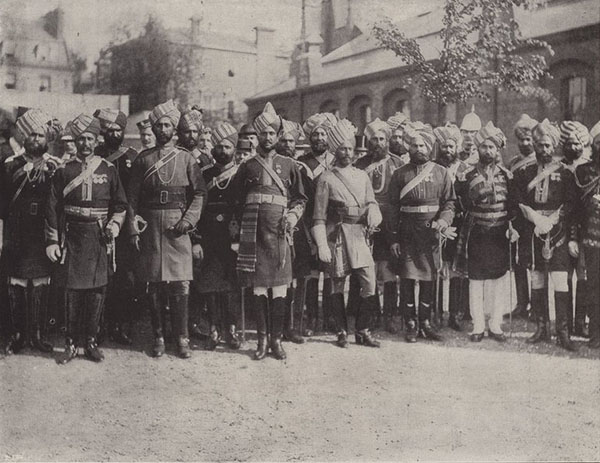
Caption: Sikh soldiers in London, 1887.
A group of Sikh soldiers in the British Army travelled across Canada on their way to celebrate Queen Victoria’s Diamond Jubilee. They arrived in Vancouver by ship from Hong Kong and then crossed Canada by train before sailing to London. Canada’s forests and farmland reminded them of Punjab, and many became interested in Canada as a place to work and build a future.
(Image via Wikimedia Commons)
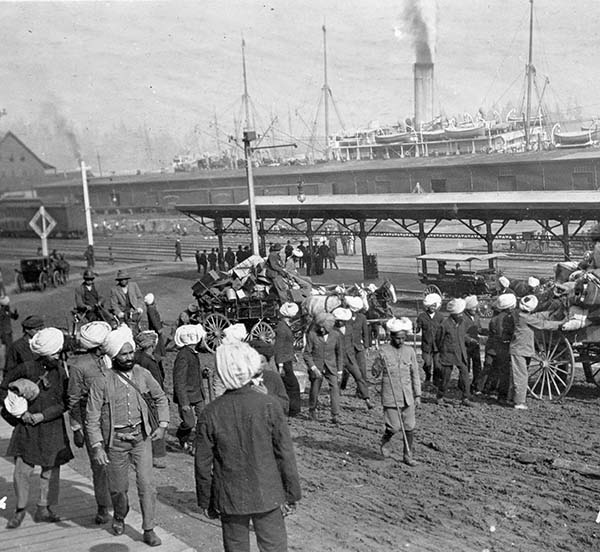
Caption: Sikh immigrants at the CPR pier in Vancouver, 1910.
Sikh immigration to Canada began in 1902 when five men arrived in Vancouver and five in Victoria. By 1904, about 30 South Asian men had arrived. Most were Sikhs who travelled through Hong Kong or other British colonies. Many came to earn money to support their families and improve their lives back in India.
(Image 2021_08_01_030 courtesy of the South Asian Canadian Digital Archive)
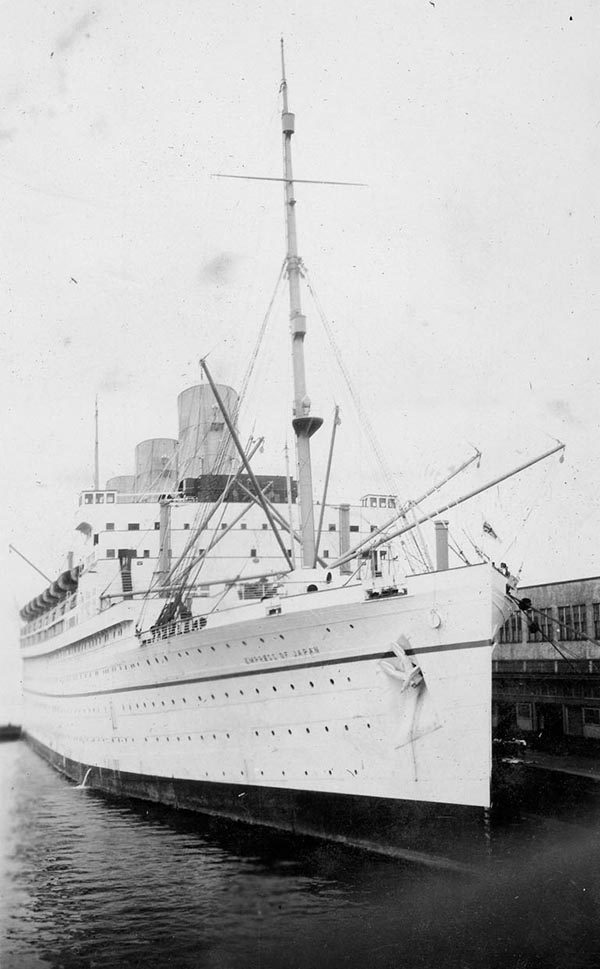
Caption: The RMS Empress of Japan at dock.
Canada passed the Continuous Journey Regulation, which said immigrants had to travel to Canada in one trip without stopping. This made it very hard for Asian immigrants, whose ships needed to stop along the way.
(Image 2014.14.2.2.104 courtesy of the Nikkei National Museum & Cultural Centre)
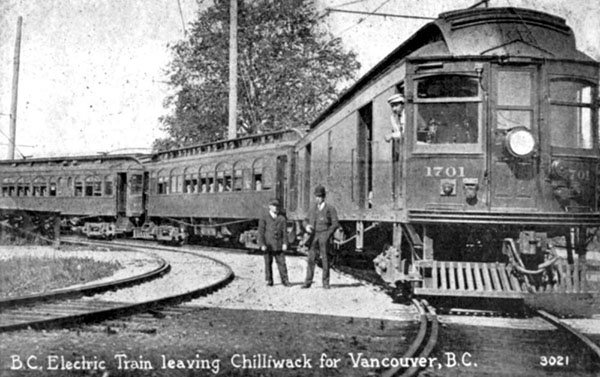
Caption: BCER Train on the Chilliwack-Vancouver line, 1910s.


Many new railways were built in Abbotsford, such as the Great Northern Railway, the Canadian National Railway, and the B.C. Electric Railway. These railways helped the lumber and dairy industries grow because they could now ship products quickly to cities like Vancouver. The Mill Lake lumber mill became one of the area’s most important businesses.
(Image E-00487 courtesy of BC Archives)
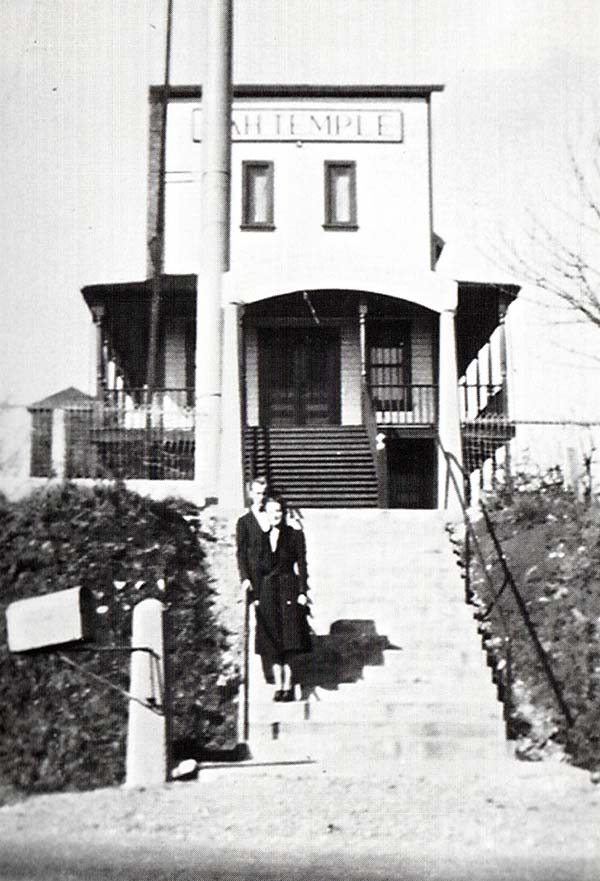
Caption: Gur Sikh Temple circa 1940.
Sikh mill workers in Abbotsford began building a Gurdwara, or Sikh temple. After long workdays, they carried building materials from Mill Lake up a hill to the site on South Fraser Way. When the temple opened in 1912, it became an important place for worship and community. It also helped support men who were separated from their families because of discriminatory immigration rules.
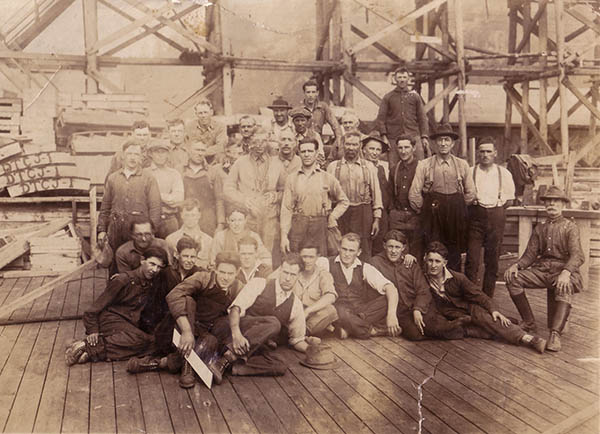
Caption: Millworkers from the Abbotsford Lumber, Mining, & Development Company, circa 1920s.
The lumber mill on Mill Lake upgraded by adding new machines. By this time about 150 workers of South Asian, Japanese, Chinese, and European backgrounds worked at the mill.
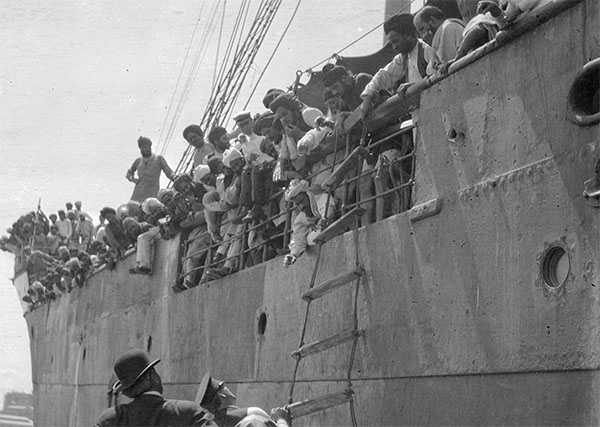
Caption: Men on board the Komagata Maru, 1914.
In 1913, the ship Panama Maru arrived in Victoria with 56 South Asian passengers. Only 17 people who could prove previous residency were allowed to enter Canada, and the rest were deported. In 1914, the Komagata Maru arrived in Vancouver with 376 passengers from India. The ship was kept in the harbour for months and then forced to leave. These events happened because of the discriminatory Continuous Journey Regulation which stopped many South Asian people from entering Canada.
(Image 2021_05_063 courtesy of the South Asian Canadian Digital Archive)
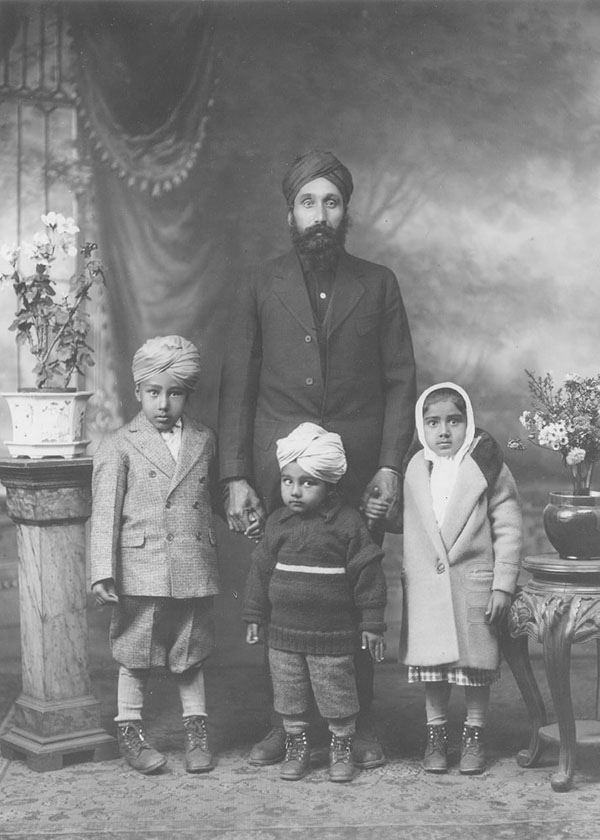
Caption: Abbotsford's Giani Naranjan Singh Thauli with three of his children.
The Canadian government changed the rules so Asian immigrants could apply to bring their wives and children to Canada. Before this, many men in Abbotsford worked for years without seeing their families. Even after the rule change, it often took a long time for families to reunite.
(Image 2005-033-001 courtesy of Delta Museum and Archives)
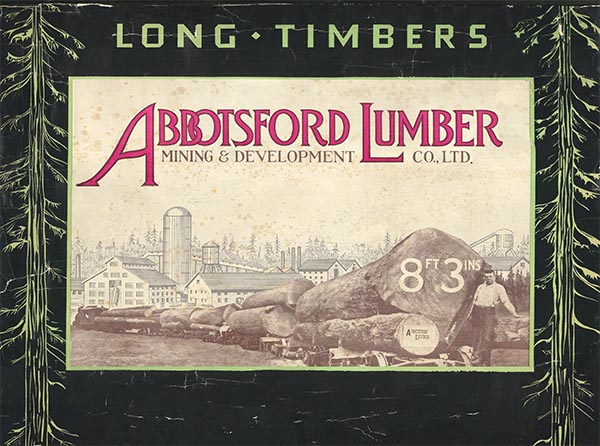
Caption: Advertisement for the Abbotsford Lumber Mining & Development Company, circa 1919 to 1928.
The lumber mill on Mill Lake expanded, and business was strong. In 1924, the mill closed for six weeks to upgrade its machines so it could process even more lumber. That year was a record year, with 275 workers and millions of feet of lumber produced.
(Image 85.41.1099 from Heritage Abbotsford Society)
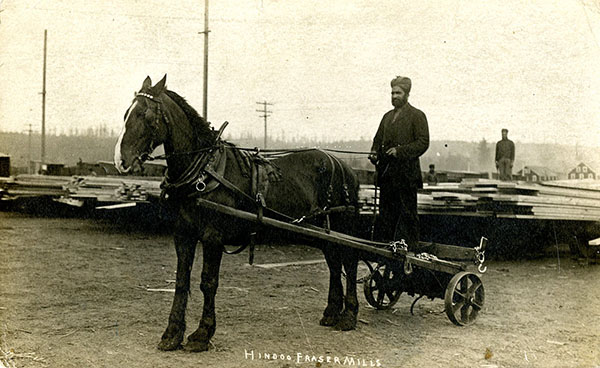
Caption: Millworker with a horse and cart at the Fraser Mills Lumberyard.
By 1924, most South Asian people living in B.C. worked in lumber mills. Out of about 680 South Asians in the province, around 609 were mill workers.
(Image MH.2011.3.21 courtesy of City of Coquitlam Archives)
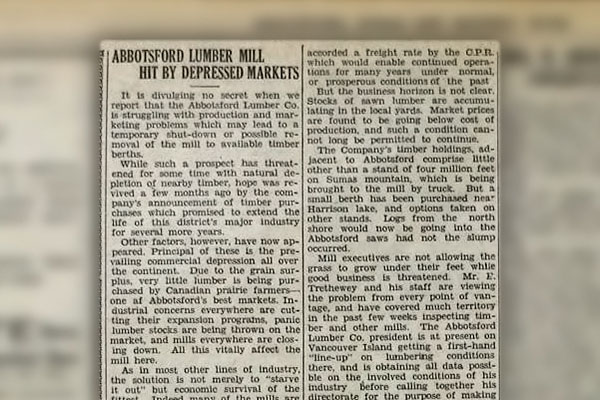
Caption: Article about the Abbotsford Lumber Company from the ASM News, circa 1930.
By 1928, the Abbotsford Lumber Company was in decline. Most of the nearby trees had already been cut, and the Great Depression made lumber less in demand. Because of pressure from locals and fewer jobs, the company fired 40–50 workers who were of South Asian, Chinese, and Japanese backgrounds—a racist layoff meant to keep jobs for white European workers. By the mid-1930s, the Abbotsford mill closed, logging stopped, and the company switched to selling products in stores instead.
(Image courtesy of the Abbotsford, Sumas and Matsqui News Archive)
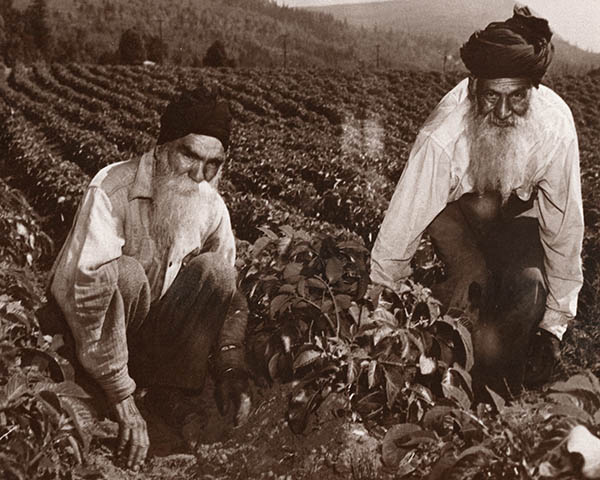
Caption: Jassa and Munsha Singh tend a potato crop on Sunder Singh Thandi's farm, 1953.
During the 1930s, many South Asian immigrants arrived in Canada seeking work after facing hardship and limited opportunities in Punjab. Many immigrants worked in lumber mills for very low pay. As mills closed and jobs became scarce during the Great Depression, some families used their earnings to buy land. They became farmers, helping their communities settle permanently in the Fraser Valley.
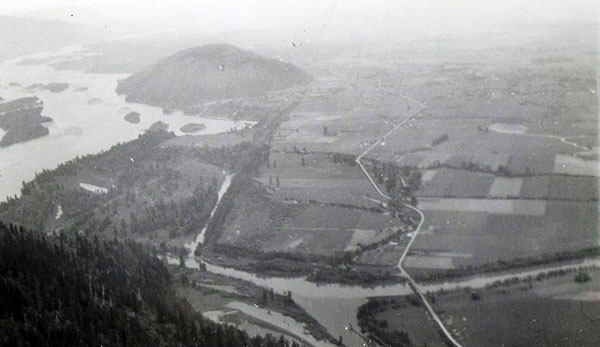
Caption: Aerial view from Sumas Mountain showing the Interprovincial highway running east to west over the Vedder Canal, circa 1940s.
In 1931, the first part of the Trans-Canada Highway in the Fraser Valley opened on Sumas Prairie. By 1941, the route from Clearbrook to Vancouver was complete. Trucking companies—mostly owned by white settlers at first—began moving goods by road. This made the railways less important to the local economy.
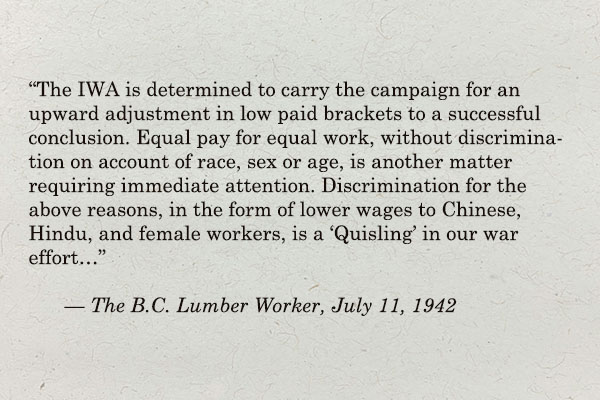
Because they were treated unfairly and did not have full rights as citizens, South Asian workers in the Fraser Valley worked together and raised money to support the fight for equality on a national level. South Asian workers were also on the front lines of the local International Woodworkers of America-Canada unionization effort, and fought successfully for better living conditions and equal pay for all lumber workers in the early 1940s.
(Quote taken from Page 5 of The B.C. Lumber Worker, Vol. XI, No. 13, July 11, 1942)
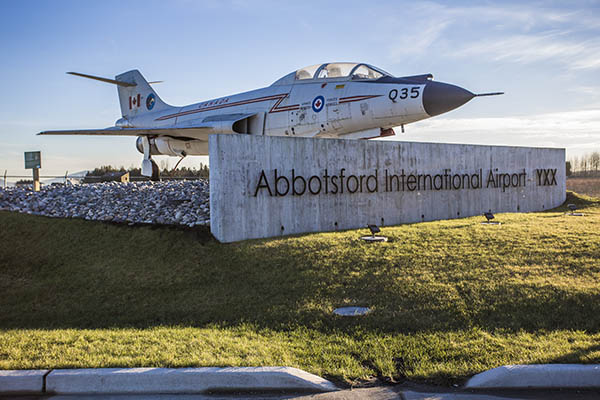
Caption: Entrance to the Abbotsford International Airport.
During World War II, an airport was built in Abbotsford to help defend the west coast. It opened on July 14, 1943, and became Canada’s biggest military airport, with more than forty buildings. The Royal Canadian Air Force Station closed in 1945, and the airport became civilian-run in 1958. In 1997, the City of Abbotsford bought it from the federal government, and it still operates today as Abbotsford International Airport.
(Image by YXXOps, CC BY-SA 4.0, via Wikimedia Commons)
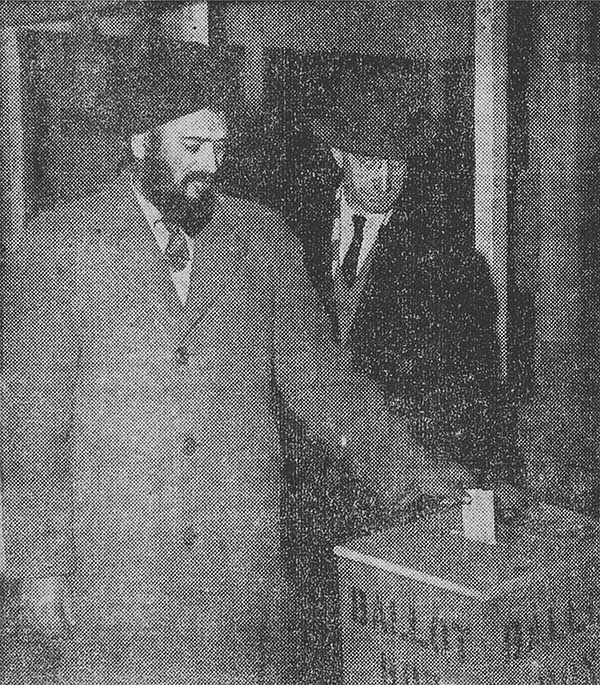
Caption: Mahinder S. Beadall, believed to be the first South Asian man to vote in Canada, casts his ballot.
After decades of advocacy and work in forestry and agriculture without full rights, South Asian labourers finally gained the right to vote, own land, and become Canadian citizens.
(Image 2021_05_002 courtesy of the South Asian Canadian Digital Archive)
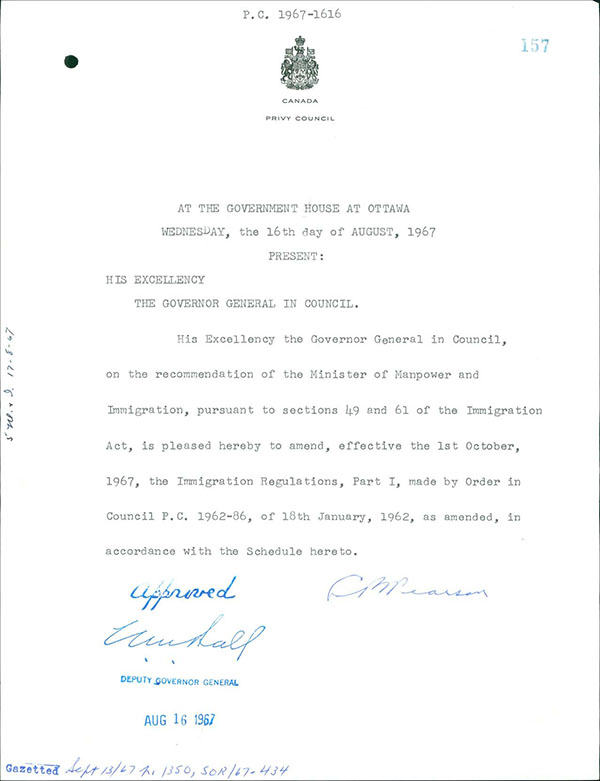
Caption: Order in Council amending immigration policy, 1967.

In 1962, Canada ended its system that set limits based on a person’s country of origin. In 1967, a new point system was created to decide who could immigrate, attempting to make Canada’s immigration rules fairer and less racist. However, the points system gave preference to workers with skills and education, instead of farmers and labourers who came from less privileged backgrounds.
("Immigration Act, Immigration Regulations, Part 1, Amended" courtesy of Library and Archives Canada via the Canadian Museum of Immigration at Pier 21)
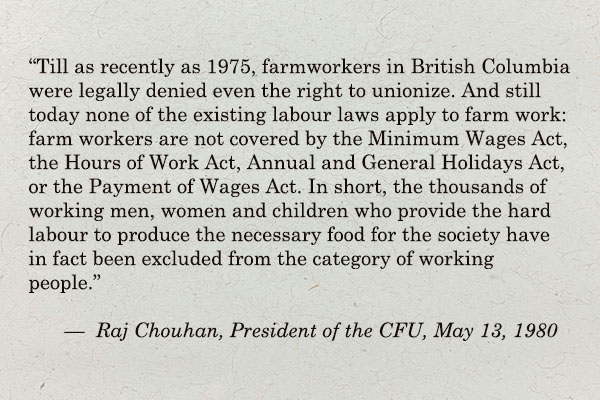
On April 6, 1980, South Asian immigrants in B.C. helped start the Canadian Farmworkers Union (CFU). Many farm workers faced long hours, dangerous work, and little protection under the law. By organizing together, CFU members fought for fair pay, safer workplaces, and basic rights.
(Quote taken from Raj Chouhan's Speech at BC Conference of the United Church of Canada in Victoria)
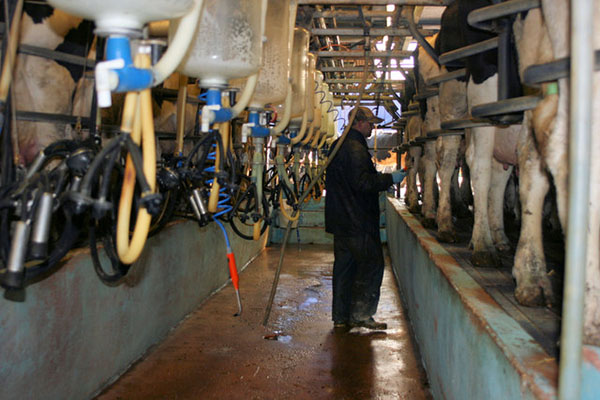
Caption: Farmer runs milking machines on a dairy farm.
As local farm workers became harder to find, Canadian farms used programs to bring in migrant workers. The Temporary Foreign Worker Program began in 2002, and the Seasonal Agricultural Workers Program expanded to British Columbia in 2004. Workers were hired on short-term contracts and could only work for one employer, which made it hard for them to refuse unsafe or unfair work conditions. The United Food and Commercial Workers Union (UFCW) argued that this system created a workforce that is vulnerable to exploitation.
(Image by Nick Chipchase, CC BY-SA 2.0, via Wikimedia Commons)