

 Indigenous
  South Asian
  Scandinavian
  Migrant Worker
  Mennonite
  Japanese
  British/Anglophone
Indigenous South Asian Scandinavian Japanese British/Anglophone
Indigenous South Asian Scandinavian Migrant Worker
Mennonite Japanese British/Anglophone
Indigenous South Asian Scandinavian Japanese British/Anglophone
Indigenous
South Asian
Scandinavian
Migrant Worker
Mennonite
Japanese
British/Anglophone
Indigenous
South Asian
Scandinavian
Japanese
British/Anglophone
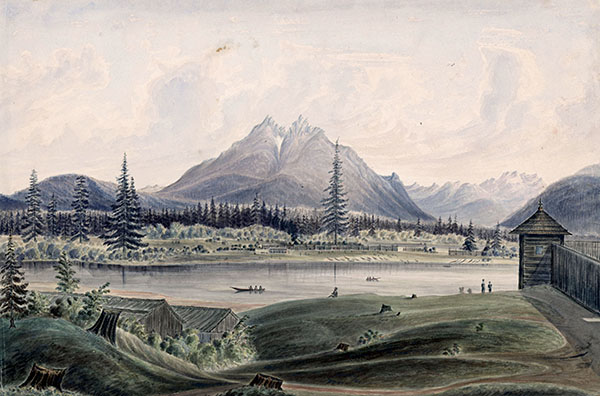
Caption: Landscape around Fort Langley, 1858.
The Hudson’s Bay Company (HBC) built Fort Langley 30 kilometres up the Fraser River, where Derby Ranch is today. The company tried to convince the Stó:lō people to trap furs, but the Stó:lō chose to keep their traditional salmon trade. Because of this, Fort Langley became mainly a salmon trading post.
(Image 102278830 courtesy of U.S. National Archives)
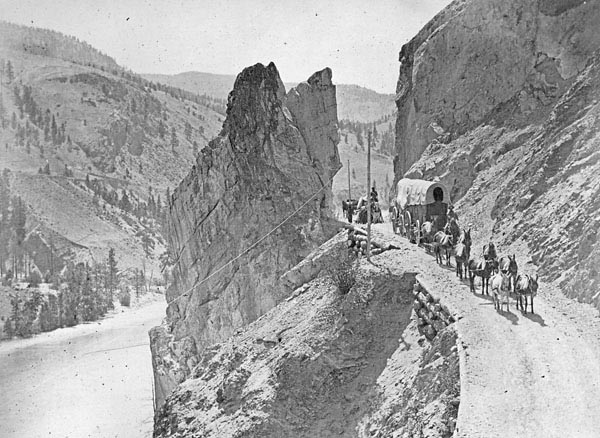
Caption: Wagons on the Cariboo Road near Yale, circa 1870s.
More than 30,000 miners came to Stó:lō Temexw (Stó:lō territory) looking for gold. Tensions grew between the Stó:lō and the newcomers. Small acts of violence turned into organized attacks by American soldiers against the Stó:lō people. Fighting broke out in the Fraser Canyon. When fall and winter came, hundreds of miners became sick with malnutrition and scurvy, and the Stó:lō helped them by giving them food.
(Image C-008077 courtesy of Library and Archives Canada)
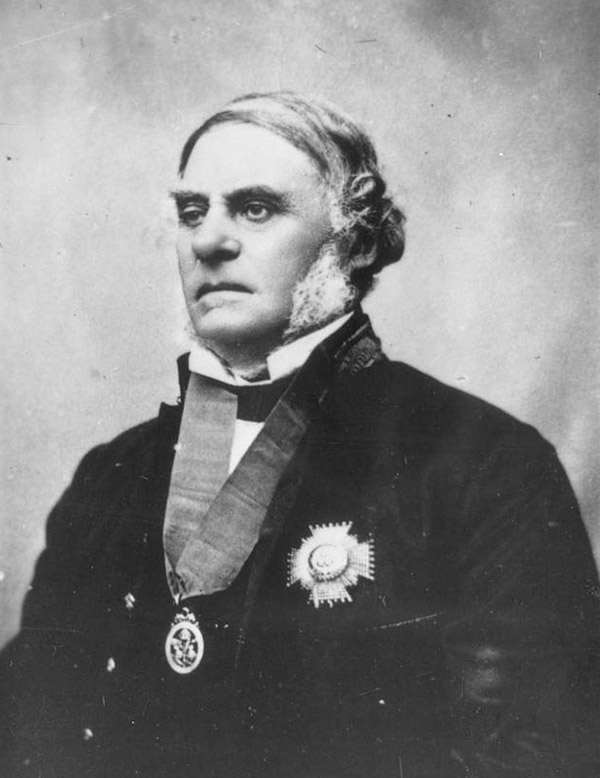
Caption: Governor James Douglas, 1864.
So many American miners came to the area looking for gold that the British government decided to make British Columbia a crown colony. James Douglas, Chief Factor of the Hudson’s Bay Company, became the first Governor.
(Image A-01229 courtesy of BC Archives)
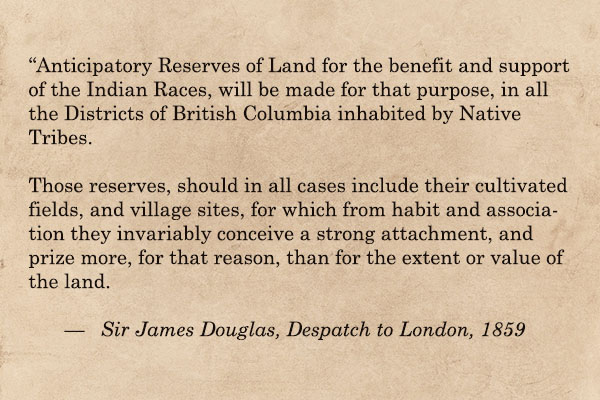
In response to protests by the Stó:lō people over the actions of gold miners, Governor Douglas promised to protect certain lands as exclusively belonging to the Stó:lō people. He began the creation of the reserve system.
(Quote taken from Despatch to London CO 60:4, no. 4800, 212)
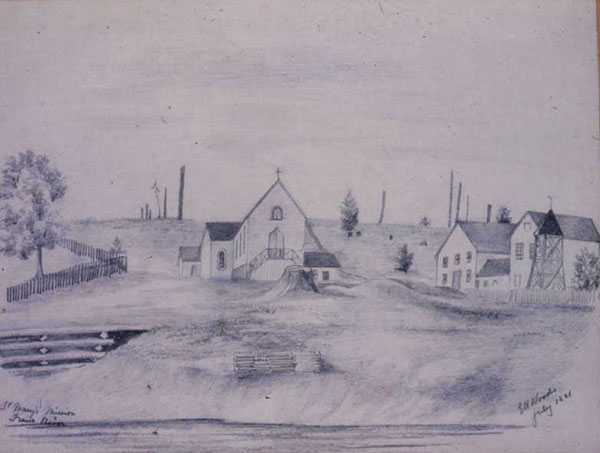
Caption: St. Mary's Mission, 1881.
Governor Douglas introduced a policy called “benevolent assimilation” for Indigenous people. Like many colonists at the time, he believed that Indigenous people would eventually become like Europeans. He thought that if they kept their traditional culture, they would become extinct. The first permanent Roman Catholic missionaries from the Oblates of Mary Immaculate (OMI) arrived this year and tried to force the Stó:lō people to give up their way of life and spiritual practices. These missionaries went on to create St. Mary’s Residential School, and played a major role in the cultural genocide of the Stó:lō people.
(Image taken from PDP01616 courtesy of BC Archives)
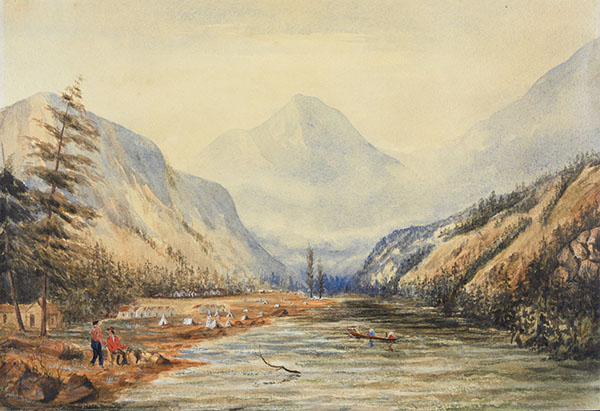
Caption: British Marines camp in the Fraser Canyon, 1859.
More than 3/4 of the gold miners who came for the Gold Rush leave Stó:lō Temexw. They left behind a legacy of disease, alcohol use and violence.
(Image 1989-171-29 courtesy of Library and Archives Canada)
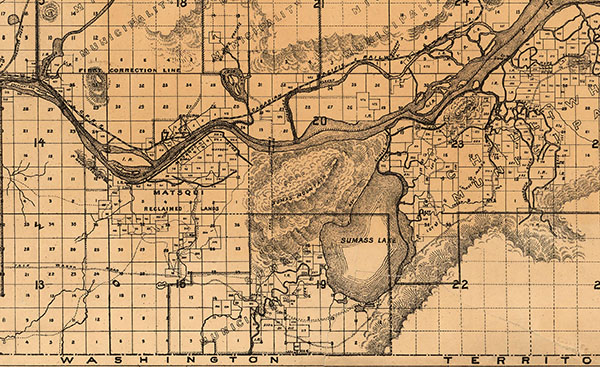
Caption: Map of the central Fraser Valley showing the grid used by the pre-emption system, 1892.
At this time, pre-emption was the way for people to claim land in B.C. If someone wanted ownership over a parcel of Crown land, it could be granted to them if they “improved” it by farming or building businesses. This system started in 1859 and became official in 1870.
(Image taken from MAP 446 courtesy of City of Vancouver Archives)
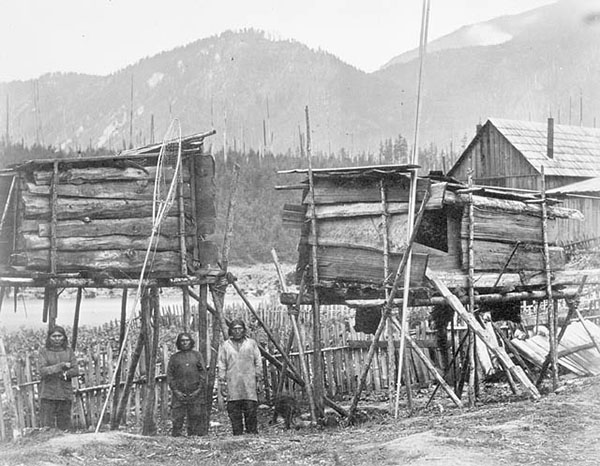
Caption: Indigenous fishers pose with their dried salmon caches near the Fraser River, ca. 1870.
A new system of exchanging money for work, known as a wage economy, began to emerge in Stó:lō Temexw. With their specialized skills and knowledge, the Stó:lō people were favoured employees. They received high wages in exchange for their work and expertise.
(Image C-024288 courtesy of Library and Archives Canada)
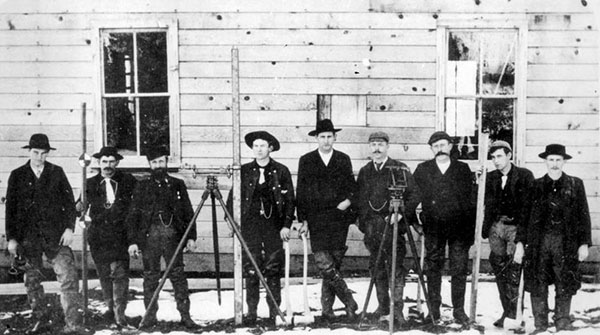
Caption: Sumas Prairie Surveyors, 1893.
Governor James Douglas led the Stó:lō people to believe that treaties would be signed to protect their lands. At the same time, settlers started arriving from Britain. Douglas had promised them good, cheap farmland in the Fraser Valley. The settlers chose the land they wanted and began building homes and clearing fields.
(Image D-01074 courtesy of BC Archives)
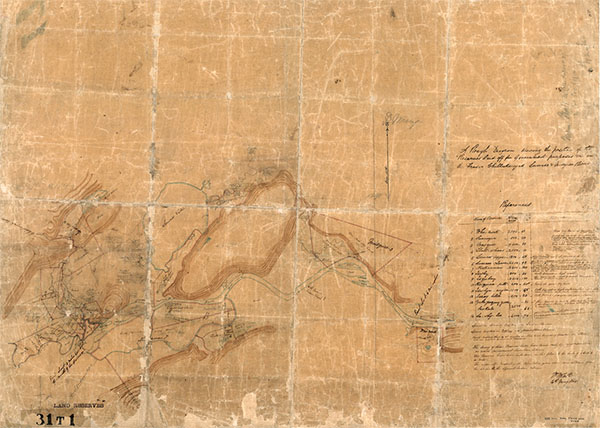
Caption: Map of the original reserves in the lower Fraser Valley, 1864.
Governor Douglas did not get enough money together to pay for treaties with the Stó:lō, so he decided to delay the treaty process. He started setting up reserves under the guidance of Stó:lō leaders. However, before the reserves could be officially registered, Douglas retired.
(Image taken from 31T1LR courtesy of University of Victoria Library)
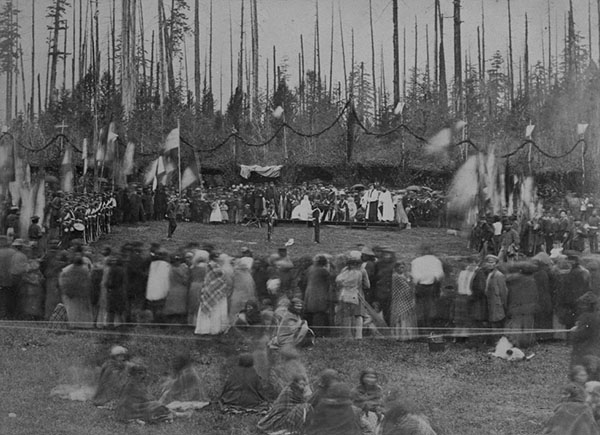
Caption: A group of Indigenous people meet with Governor Seymour's wife in 1867.
Unhappy with the situation, the Stó:lō people made a speech to the new governor, Frederick Seymour. They gave him a written petition asking that their reserve lands and rights be protected by the government. Seymour promised to respect the boundaries set during Governor Douglas’s time. But later, he gave in to pressure from settlers and land speculators and allowed more land to be opened for settlement.
(Image C-088942 courtesy of Library and Archives Canada)
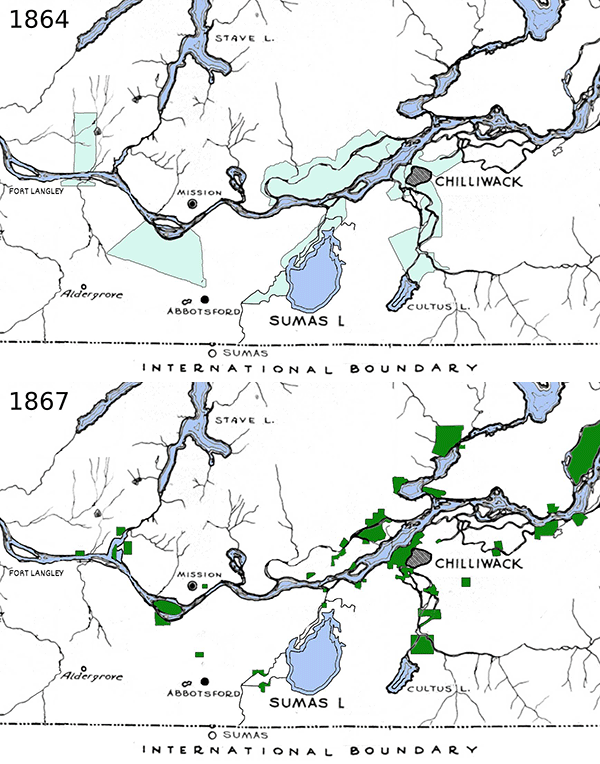
Caption: Map showing the reduction in reserves from 1864 to 1867.
Joseph Trutch, the Commissioner of Lands and Works, refused to recognize the original reserves created between Governor James Douglas and Stó:lō leaders. He denied the existence of Aboriginal Title, and had the reserves resurveyed. The boundaries were reduced by 91 percent without the consent of the Stó:lō people.
(Image taken from Seelkee, CC BY-SA 4.0, via Wikimedia Commons)
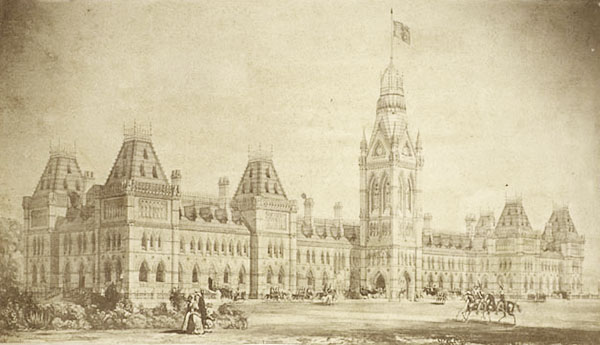
Caption: Canadian Parliament buildings circa 1870.
The Canadian Government wanted more settlers in the west to stop the United States from expanding north. They created the Immigration Act, opening offices in the United Kingdom and promising safe travel to people who wanted to move to Canada. Immigrants from Europe were preferred, but people of all backgrounds could come.
(Image Acc. No. 1970-190-4 courtesy of Library and Archives Canada)
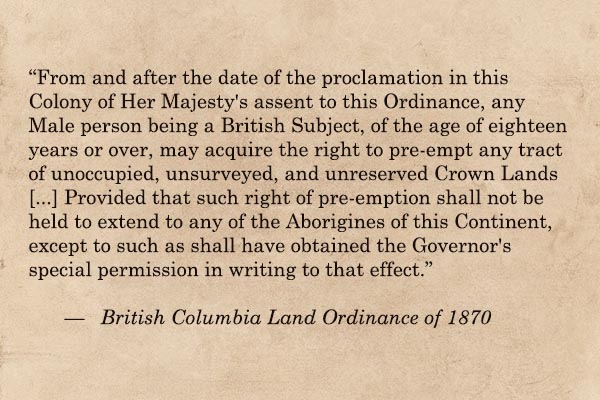
The British Columbia colonial government passed a law that stopped Indigenous people from pre-empting land without special permission. It also prevented them from buying land from settlers. Indigenous families were given much less land per family than settler families received.
(Quote taken from the BC Land Ordinance of 1870)
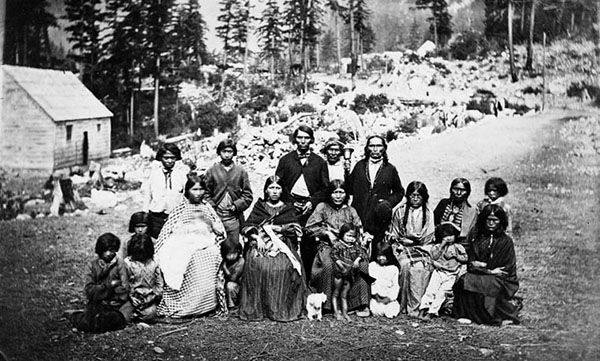
Caption: Indigenous group at Boston Bar, 1863–1867.
As their reserve lands were shrunk and access to traditional resources restricted, the Stó:lō people adapted to the new colonial economy. Families started using settler farming methods, but they could not grow many cash crops because their lands were smaller and less fertile. Floods often ruined their harvests, so some people began raising cattle instead. Wage labour and activities like berry-picking helped families survive through the year.
(Image C-088948 courtesy of Library and Archives Canada)
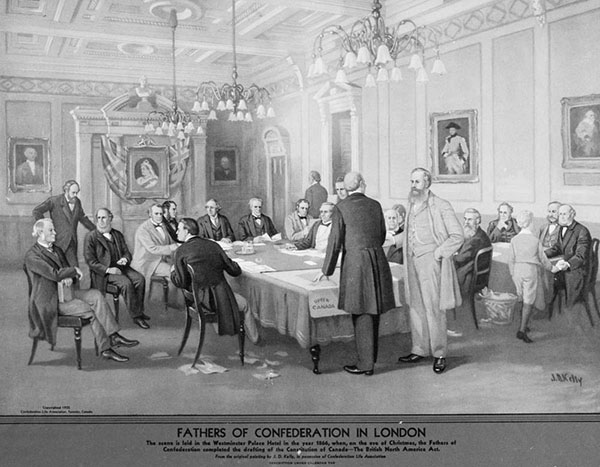
Caption: Meeting of the Fathers of Confederation in London, drawn in 1935.
The crown colonies of Vancouver Island and British Columbia combined and became the 6th province of Canada, with Victoria as the capital city. The federal government took over Britain's commitments to Indigenous peoples.
(Image D-05642 courtesy of BC Archives)
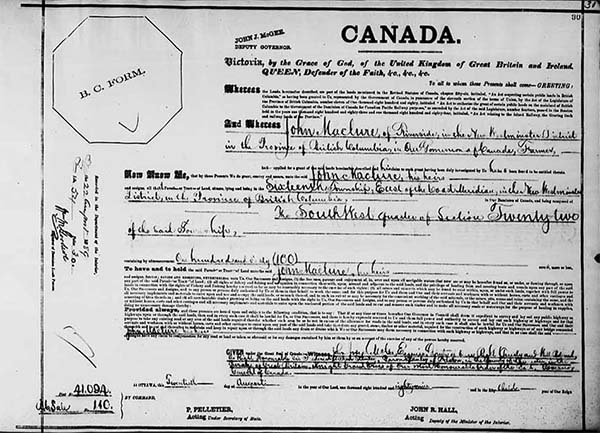
Caption: Western Land Grant in the Name of John Maclure, 1889.
In 1872, the Dominion Lands Act launched the Dominion Lands Survey, a massive project which helped map out the western provinces. It allowed male settlers over the age of 21 to claim 65 hectares of land for $10. This encouraged more European settlers to move west.
(Image courtesy of Library and Archives Canada)
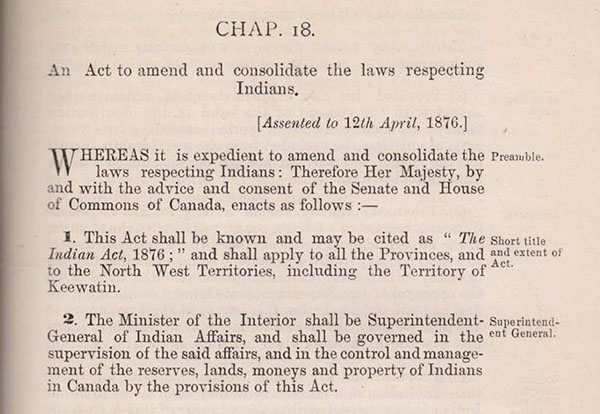
Caption: Excerpt from the 1876 Indian Act.
The Canadian government introduced the Indian Act into law. This law is still used today to manage First Nations and their reserves. It gave the government the power to determine who was or wasn’t Indigenous through the system of “Indian” status. The act stopped Indigenous people with this status from voting, took away the power of communities to govern themselves, and banned religious and cultural ceremonies. The law was meant to control Indigenous peoples by forcing them to adopt settler culture and forget their own.
(Image courtesy of National Centre for Truth and Reconciliation)
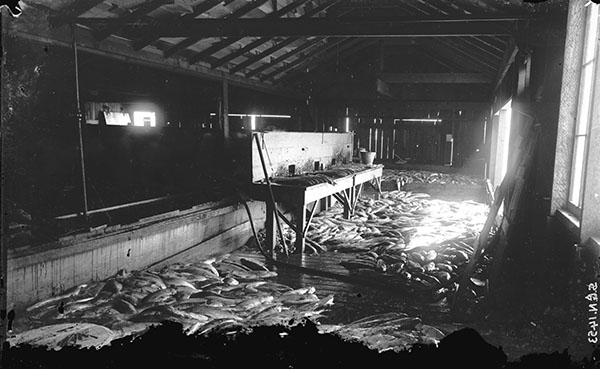
Caption: Interior of a Salmon Cannery, 1890s.
Starting in the 1880s, settlers began opening canneries on the Fraser River. These canneries caught and packed fish to be sold around the world. Many Stó:lō families found work at the canneries, with men doing the fishing and women and older children processing the salmon. Japanese and Chinese labourers were also employed to process fish at the canneries. Work was segregated by race and supervised by white management.
(Image SGN 1453 courtesy of City of Vancouver Archives)
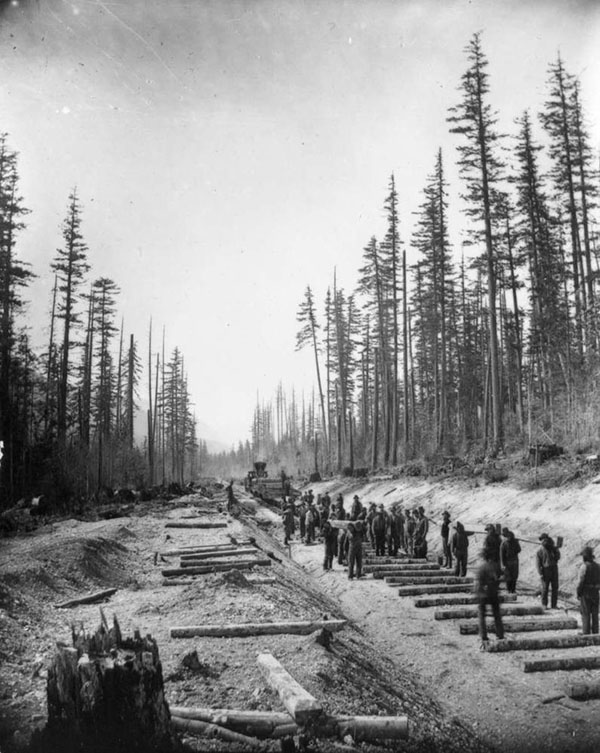
Caption: Men laying railway ties through the Fraser Valley, circa 1881–1883.
The Canadian Pacific Railway (CPR) began running through the Fraser Valley. Travel became much easier, and many European settlers moved into Stó:lō Temexw. This created more competition for jobs for Stó:lō workers. Employers started hiring Chinese workers for low pay in jobs that Stó:lō people used to do. This was unfair because it took advantage of Chinese workers and lowered wages for Stó:lō workers.
(Image A-07021 courtesy of BC Archives)
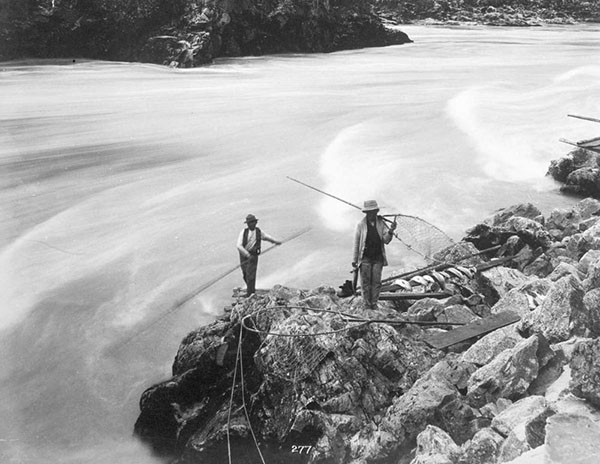
Caption: Stó:lō fishers catch salmon with nets, circa 1880s.
Because commercial overfishing was destroying salmon runs, the government banned the sale of fish caught in non-tidal waters without a license. Stó:lō fishers were not given these licenses, which meant they could not legally run their own commercial fishing businesses.
(Image A-06077 courtesy of BC Archives)
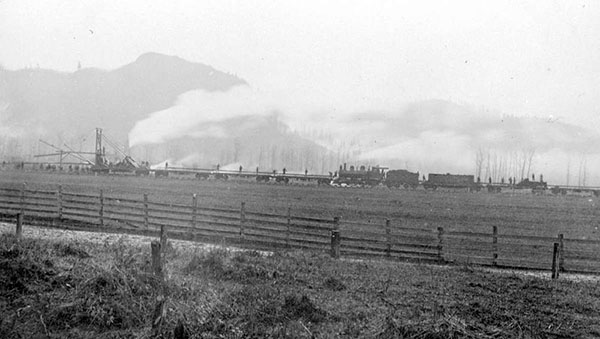
Caption: Train travels through Matsqui Prairie, circa 1912.
In 1889, an additional Canadian Pacific Railway line from Mission to the U.S. border was built. John Cunningham Maclure, a former Royal Engineer, pre-empted the land that would become downtown Abbotsford because he knew it was the best spot to build the railway. The station built there was named “Abbotsford” after Harry Abbot, a CPR superintendent.
(Image E-00487 courtesy of BC Archives)
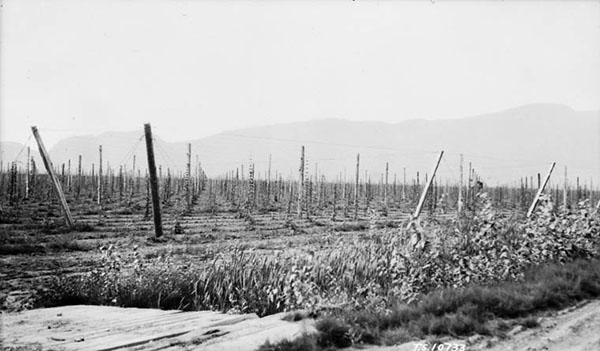
Caption: Hop field on Sumas Prairie, 1926.
Farmers in the Fraser Valley began growing hops, which provided seasonal work for Stó:lō workers. Both white and Stó:lō workers were hired to pick hops, but groups worked on different fields and didn’t mix very much. All pickers were paid the same, no matter what race, age, or gender they were. Hops-picking continued to be important to the Stó:lō economy until machines replaced human workers in the 1950s.
(Image PA-020110 courtesy of Library and Archives Canada)
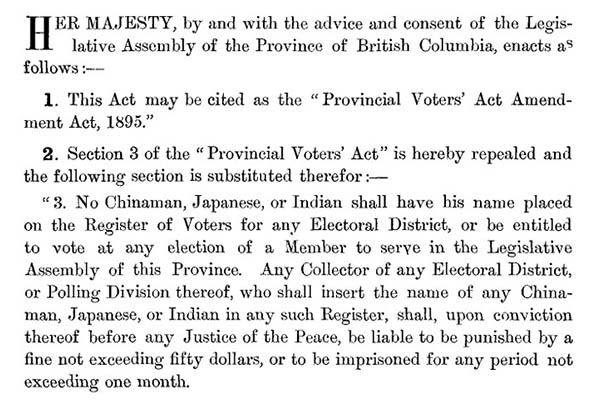
Caption: Excerpt from the Provincial Voter's Act of 1895.
Japanese and Chinese Canadians were no longer allowed to vote in local, provincial, or federal elections. This rule lasted into the 1940s. Only a small number of Japanese Canadian soldiers from the First World War were allowed limited voting rights. The 1895 amendment to the Provincial Voters' Act also banned Indigenous people from voting in Provincial elections (in addition to the federal voting ban introduced by the Indian Act in 1876).
(Image courtesy of BC Laws at gov.bc.ca)
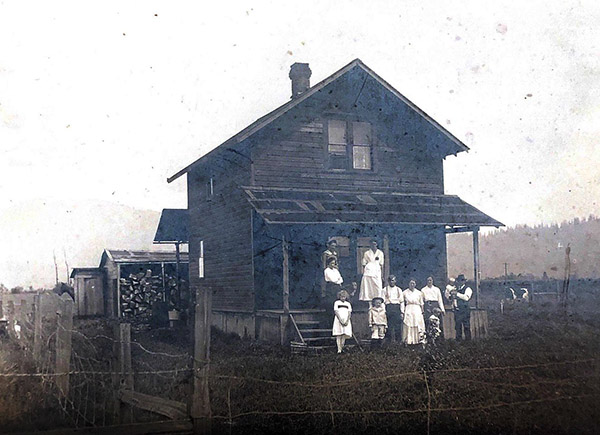
Caption: Swedish Canadian Poignant family on their homestead, circa 1917.
In the 1890s, life in Scandinavia was becoming harder. In Sweden and Norway, mandatory military service became longer. There was an economic slump, and workers felt growing pressure. Many families started looking for a better life. At the same time, more people were moving to North America. Canada had jobs and land available for settlers, which, gave Scandinavian families a reason to leave their homelands.
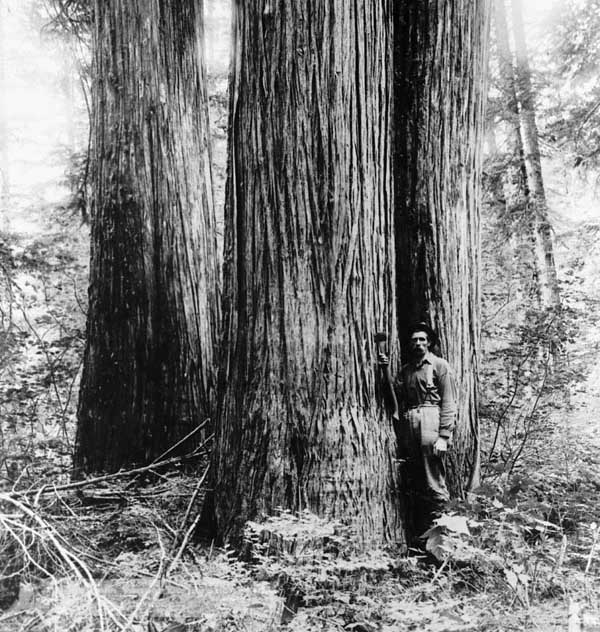
Caption: Red cedar in the Fraser Valley.
A small lumber mill opened on Railway Street in what is now downtown Abbotsford. In 1903 it became the Abbotsford Lumber Company.
(Image PA-040962 courtesy of Library and Archives Canada)
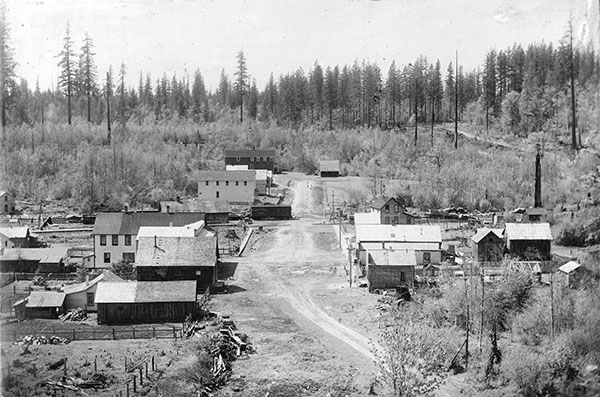
Caption: Village of Abbotsford circa 1905.
On July 9, 1891, the townsite plan for the Village of Abbotsford was officially filed. Abbotsford was one of many small villages—like Matsqui, Sumas, and Mt. Lehman—that later joined to form the city we know today.
(Image Out P754 courtesy of City of Vancouver Archives)
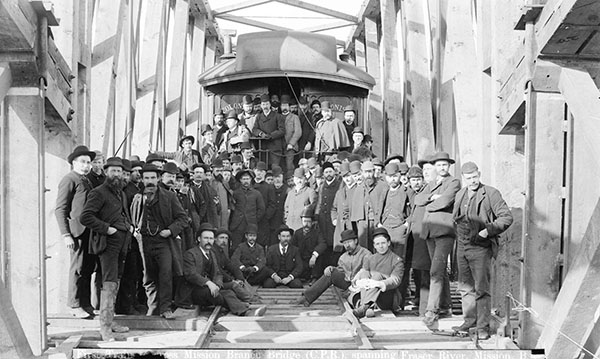
Caption: First train to cross the Mission Bridge in 1891.
In 1891 the Mission Railway Bridge opened between Mission and Matsqui. This was only the second bridge over the Fraser River and the only railway connection to the US at the time. Because travel was easier, Matsqui Prairie became more attractive place for European settlers to live.
(Image Out P45 courtesy of City of Vancouver Archives)
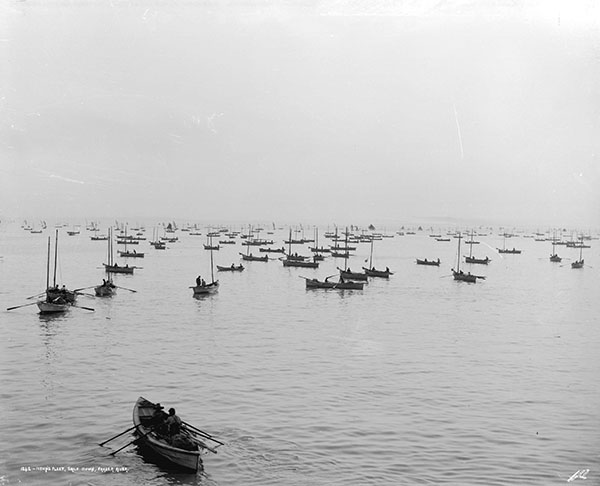
Caption: Fishing fleet on the Fraser River, 1903.
Salmon runs continued to shrink, and work dried up at the canneries. Alarmed, Stó:lō leaders wrote a letter to the leader of the Department of Indian Affairs with their concerns about overfishing. Concerns about the fisheries would continue to be brought up by the Stó:lō for decades.
(Image CVA 137-91 courtesy of City of Vancouver Archives)
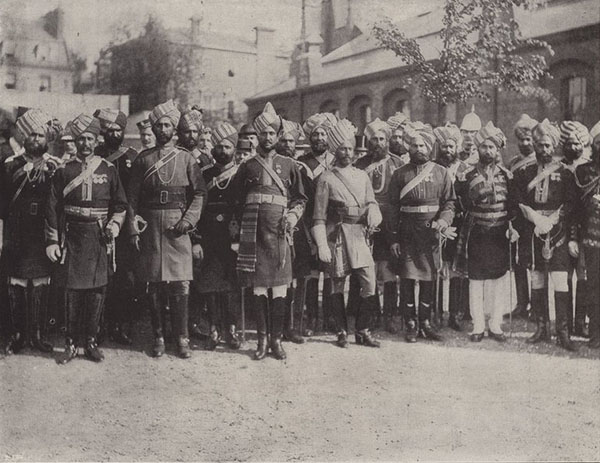
Caption: Sikh soldiers in London, 1887.
A group of Sikh soldiers in the British Army travelled across Canada on their way to celebrate Queen Victoria’s Diamond Jubilee. They arrived in Vancouver by ship from Hong Kong and then crossed Canada by train before sailing to London. Canada’s forests and farmland reminded them of Punjab, and many became interested in Canada as a place to work and build a future.
(Image via Wikimedia Commons)
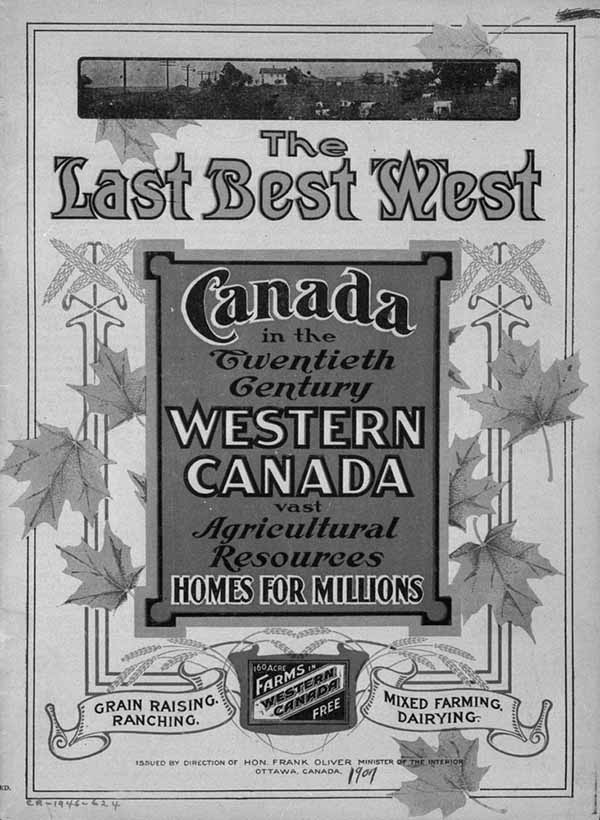
Caption: 1907 pamphlet from the Government of Canada advertising "The Last Best West".
In 1898 the Canadian government began actively promoting the western provinces as “The Last Best West”. Agents travelled to Scandinavia, while ads placed in Scandinavian-language newspapers in the United States encouraged people to move north. Magic lantern shows, newspaper stories, and letters home painted a picture of a promising new life in Western Canada. By this time, most good homesteading land in the United States had already been claimed, so many Scandinavian families crossed the border in search of a new beginning.
(Image C-030621 courtesy of Library and Archives Canada)
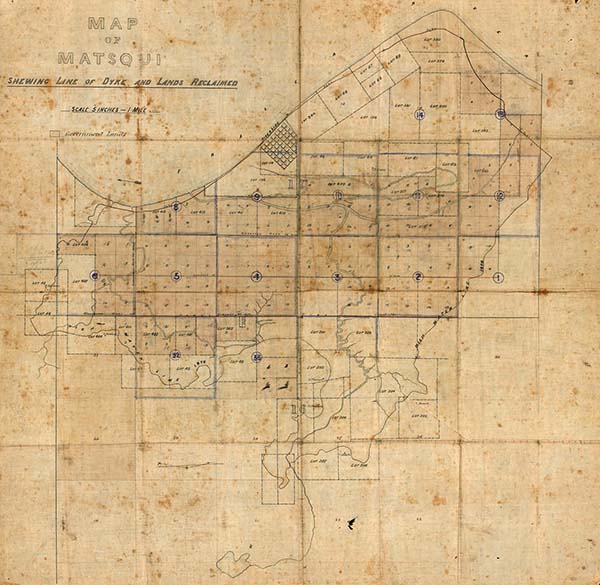
Caption: Map of the Matsqui Dykes along the Fraser River.
As settlers moved to Stó:lō Temexw, they wanted to shape the land to suit their needs. Matsqui Prairie was a desirable place to settle, but it had a problem: it flooded every year. Alexander Cruikshank was hired by the Matsqui Lands Company. He began recruiting Scandinavian families to help build the dykes needed to make the land farmable.
(Map courtesy of Library and Archives Canada)
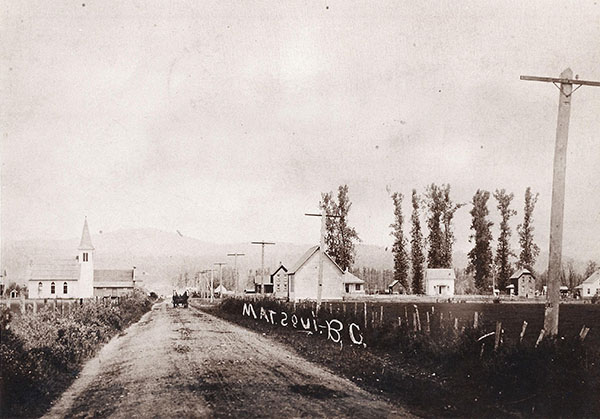
Caption: Riverside Road in Matsqui Village circa 1910.
Changes to the Dominion Lands Act allowed settlers to form cooperative communities. Groups of settlers could now live close together. This helped Scandinavian families support each other and build close communities. They created Matsqui Village, which became the commercial centre of Matsqui Prairie.
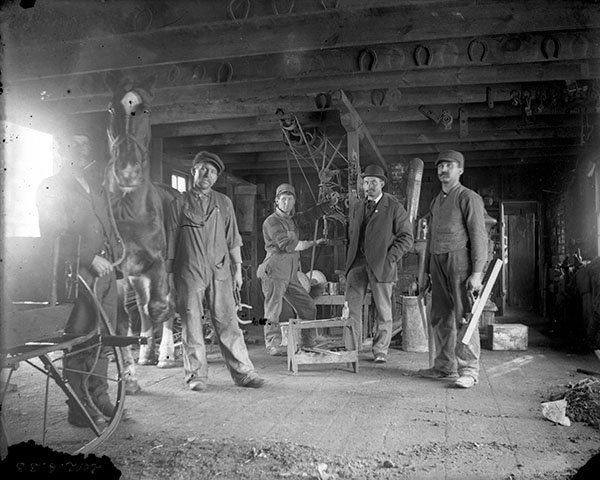
Caption: Interior of Matsqui's blacksmith shop circa 1903-1905.
Between 1899 and 1904, Cruikshank helped bring at least eighteen Swedish families to the area. New farms and homes were quickly built. He offered people jobs, land, and a chance to start fresh. Abbotsford received many Scandinavian settlers from places like Illinois, Minnesota, North Dakota and Washington State. Most of them settled in Matsqui Village, Ridgedale, and Gifford. Within just five years, Matsqui Village had two churches, a school, a post office, a general store, and a blacksmith shop.
(Image 2012.6.3b from Heritage Abbotsford Society)
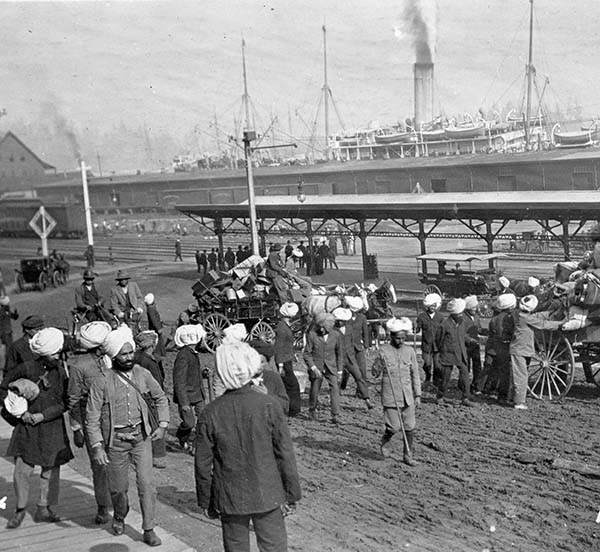
Caption: Sikh immigrants at the CPR pier in Vancouver, 1910.
Sikh immigration to Canada began in 1902 when five men arrived in Vancouver and five in Victoria. By 1904, about 30 South Asian men had arrived. Most were Sikhs who travelled through Hong Kong or other British colonies. Many came to earn money to support their families and improve their lives back in India.
(Image 2021_08_01_030 courtesy of the South Asian Canadian Digital Archive)
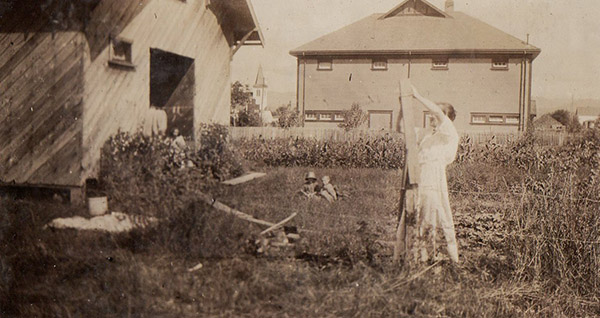
Caption: Yard of Emma Carlson's house, Matsqui Village.
By 1904, Scandinavian merchants were supplying goods to local farmers and workers, and Matsqui Village had become the bustling heart of prairie life. Many settlers moved from place to place to find the best land. Most of the first arrivals were men, alone or with a friend. They found work, built small homes or rented rooms until they felt secure enough to send for their families. A few women came on their own and worked by sewing clothes, running small photography studios, or working as hired help on farms. Some settlers, like the Olund and Flodin brothers, became known for their excellent building skills. They helped build many of Abbotsford’s first homes and businesses while also working on their own farms, shaping the physical landscape.
(Image 2019.1.975 from Heritage Abbotsford Society)
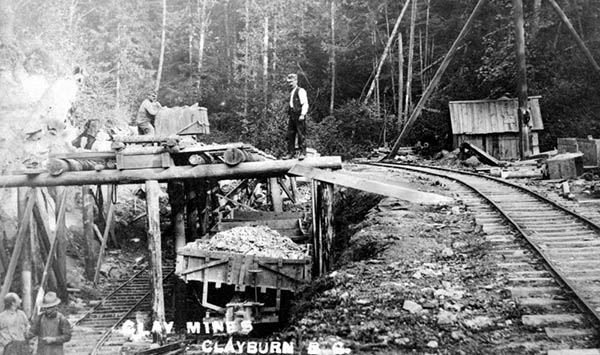
Caption: Clay mines on Sumas Mountain, 1910s.
After finding clay on Sumas Mountain that was good for heat-resistant bricks, Charles Maclure (Son of John Cunningham Maclure) started the Clayburn Company. A small company town called Clayburn Village was built beside the factory, where the workers who made bricks, tiles, pipes, and other items lived.
(Image D-08503 courtesy of BC Archives)
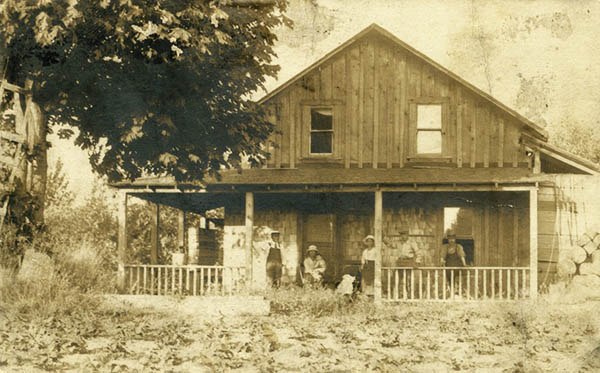
Caption: Yamamoto family and their house at Mt. Lehman, circa 1925.
The first Japanese settler to arrive in Abbotsford, Kiyu Ogata, moved to Mount Lehman. Over the next 30 years, more than seventy Issei (first generation Japanese immigrants) families followed. They were drawn to Stó:lō territory by the prospect of independent farming. They cleared land, grew crops, and helped build the Fraser Valley’s early berry farming industry.
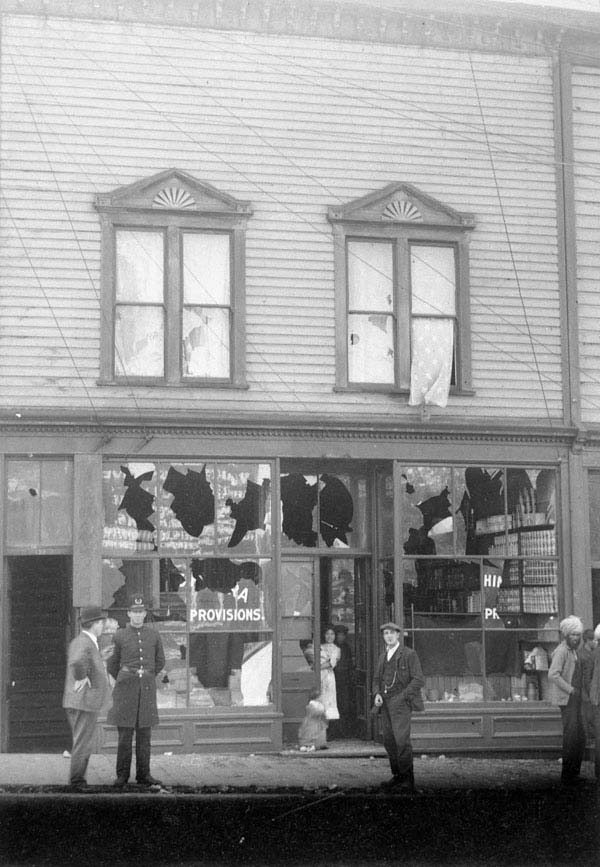
Caption: Damage done by rioters to a Japanese Canadian business in Vancouver, 1907.
Anti-Asian riots broke out in Vancouver because some people claimed that Chinese and Japanese workers, especially men, were taking jobs from white workers. To get away from the violence many Japanese Canadians moved east to the Fraser Valley. Because of public pressure, the federal government made a deal with Japan called the “Gentlemen’s Agreement.” It limited immigration to only 400 adult men per year, which stopped most Japanese people from coming to Canada. However, women and children were still allowed to immigrate.
(Image C-014118 courtesy of Library and Archives Canada)
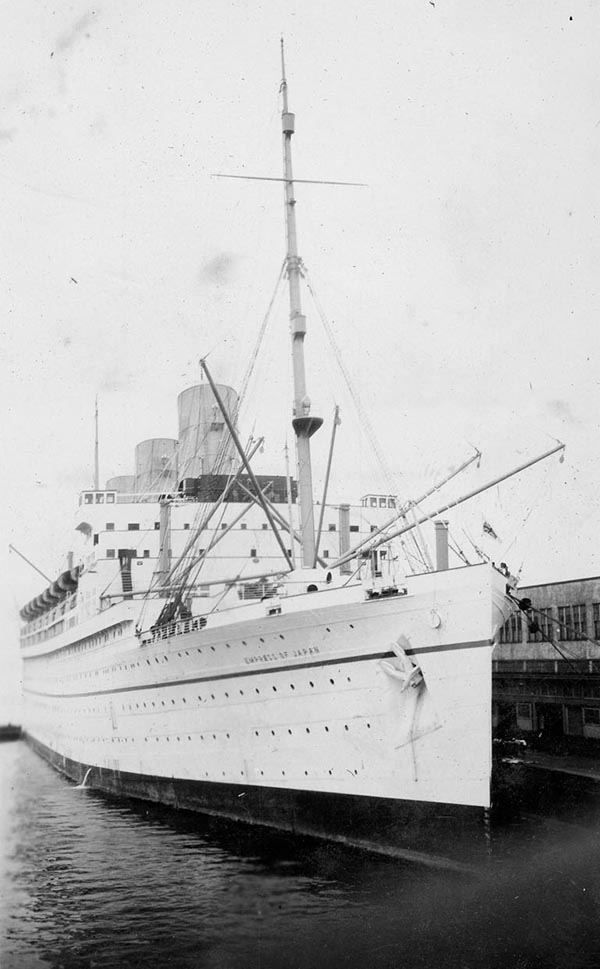
Caption: The RMS Empress of Japan at dock.
Canada passed the Continuous Journey Regulation, which said immigrants had to travel to Canada in one trip without stopping. This made it very hard for Asian immigrants, whose ships needed to stop along the way. The government also singled out Asian immigrants and charged them a $200 entry tax, which made immigration too expensive for many people.
(Image 2014.14.2.2.104 courtesy of the Nikkei National Museum & Cultural Centre)
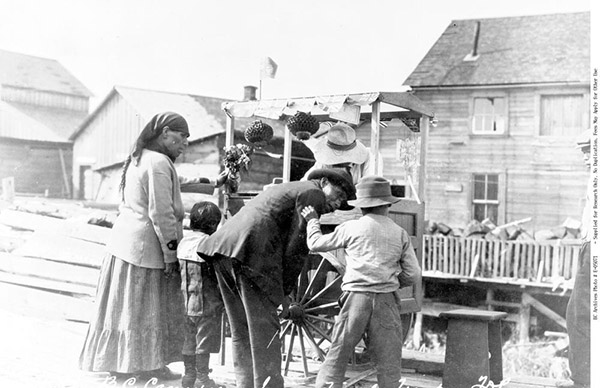
Caption: Indigenous family of cannery workers inspects a merchant's stall, 1913.
Stó:lō families continued to farm, starting kitchen gardens and producing beef and milk for market. Most continued a seasonal way of life by fishing and berry-picking in the spring and summer and picking hops and harvesting crops in the fall. Wage labour was increasingly important, but Stó:lō workers were paid less than white settlers for their work.
(Image E-05071 courtesy of BC Archives)
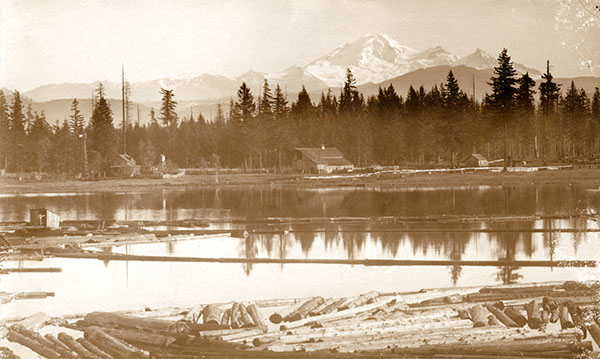
Caption: Early mill on Mill Lake with Mt. Baker in the background, circa 1901–1905.
The Abbotsford Lumber Company was sold to a group of businessmen, including brothers Richard Arthur and Joseph Ogle Trethewey. The mill moved from Railway Street to a much bigger site at Abbotsford Lake, now called Mill Lake.
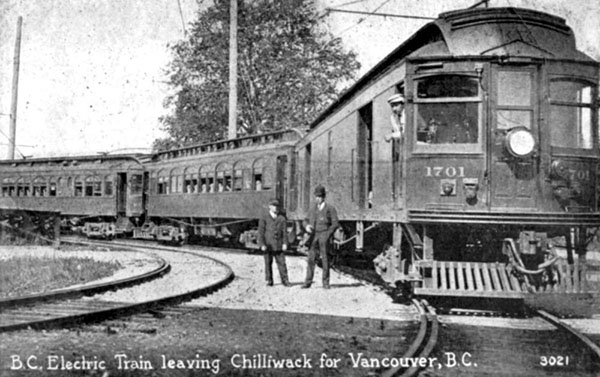
Caption: BCER Train on the Chilliwack-Vancouver line, 1910s.
Many new railways were built in Abbotsford, such as the Great Northern Railway, the Canadian National Railway, and the B.C. Electric Railway. These railways helped the lumber and dairy industries grow because they could now ship products quickly to cities like Vancouver. The Mill Lake lumber mill became one of the area’s most important businesses.
(Image E-00487 courtesy of BC Archives)
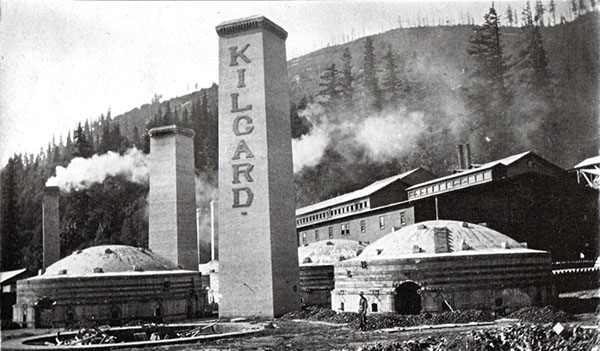
Caption: Kilgard brick factory circa 1930.
In 1909 Charles Maclure left the Clayburn Company after a disagreement and started the Kilgard Fireclay Company on Sumas Mountain. Clayburn bought Kilgard in 1918, and by 1920 they had updated the factory and moved their operations there.
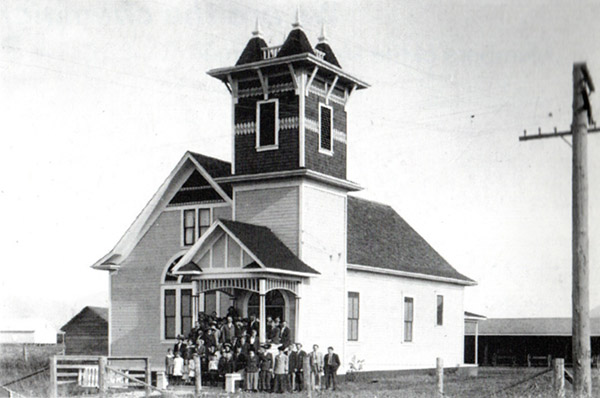
Caption: Matsqui Baptist Church circa 1910s.
In the 1910s, the Scandinavian community in Abbotsford continued to grow. A second general store opened in Matsqui Village, followed by telephone offices, a community hall, a hotel, a Baptist church, and a bank. Many of these places would later grow into successful companies and organizations.
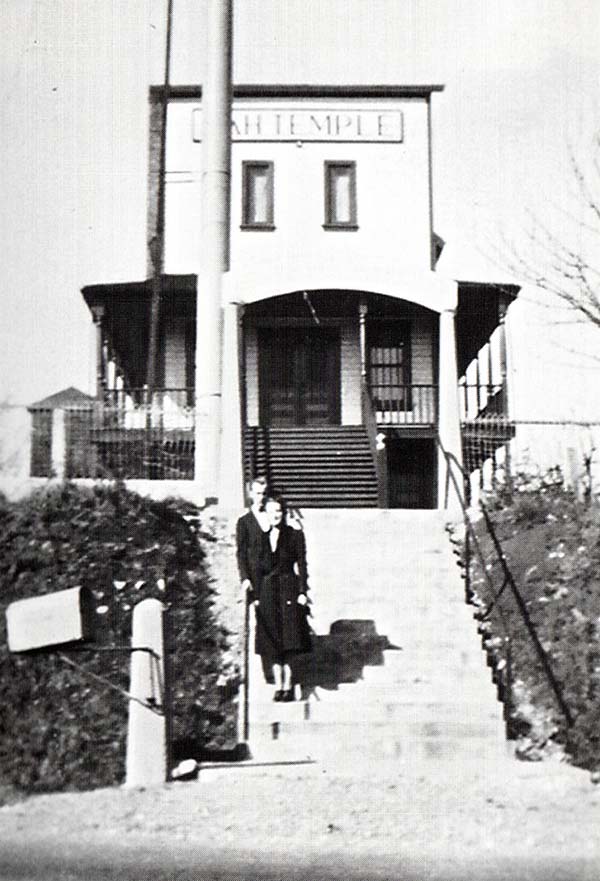
Caption: Gur Sikh Temple circa 1940.
Sikh mill workers in Abbotsford began building a Gurdwara, or Sikh temple. After long workdays, they carried building materials from Mill Lake up a hill to the site on South Fraser Way. When the temple opened in 1912, it became an important place for worship and community. It also helped support men who were separated from their families because of discriminatory immigration rules.
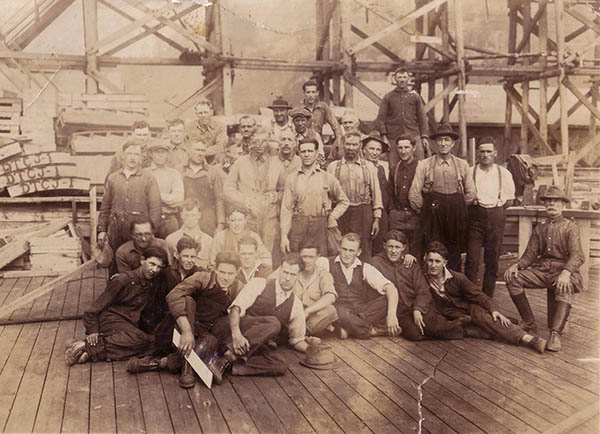
Caption: Millworkers from the Abbotsford Lumber, Mining, & Development Company, circa 1920s.
The lumber mill on Mill Lake upgraded by adding new machines. By this time about 150 workers of South Asian, Japanese, Chinese, and European backgrounds worked at the mill.
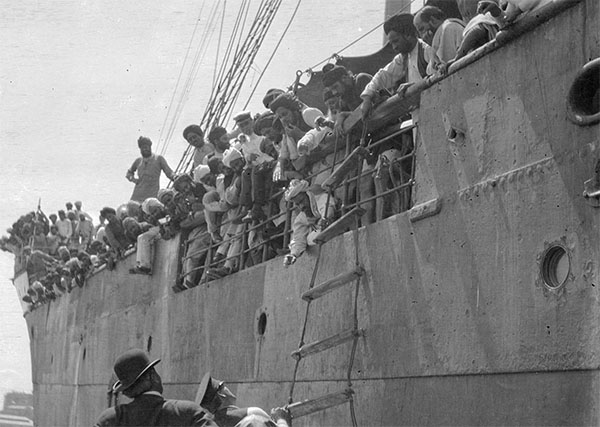
Caption: Men on board the Komagata Maru, 1914.
In 1913, the ship Panama Maru arrived in Victoria with 56 South Asian passengers. Only 17 people who could prove previous residency were allowed to enter Canada, and the rest were deported. In 1914, the Komagata Maru arrived in Vancouver with 376 passengers from India. The ship was kept in the harbour for months and then forced to leave. These events happened because of the discriminatory Continuous Journey Regulation which stopped many South Asian people from entering Canada.
(Image 2021_05_063 courtesy of the South Asian Canadian Digital Archive)
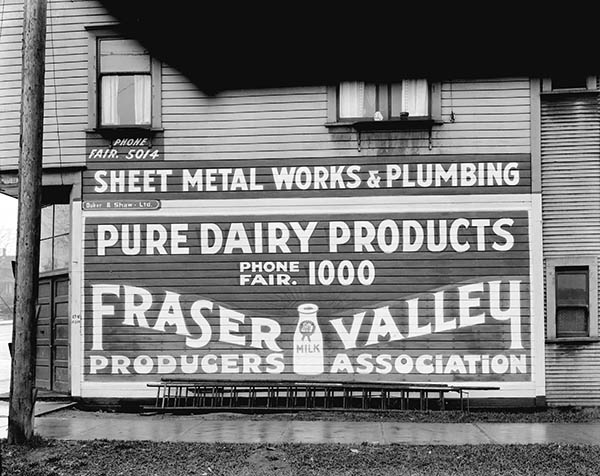
Caption: Fraser Valley Milk Producers Association advertisement, circa 1926.
In 1913, dairy farmers in the Fraser Valley created the Fraser Valley Milk Producers Association (FVMA). When it began operating in 1917, the co-op helped farmers collect and transport milk to markets and processing plants. This made it easier for farms to focus on dairy. The FVMA’s legacy continues today, including through companies like Dairyland.
(Image CVA 99-2283 courtesy of City of Vancouver Archives)
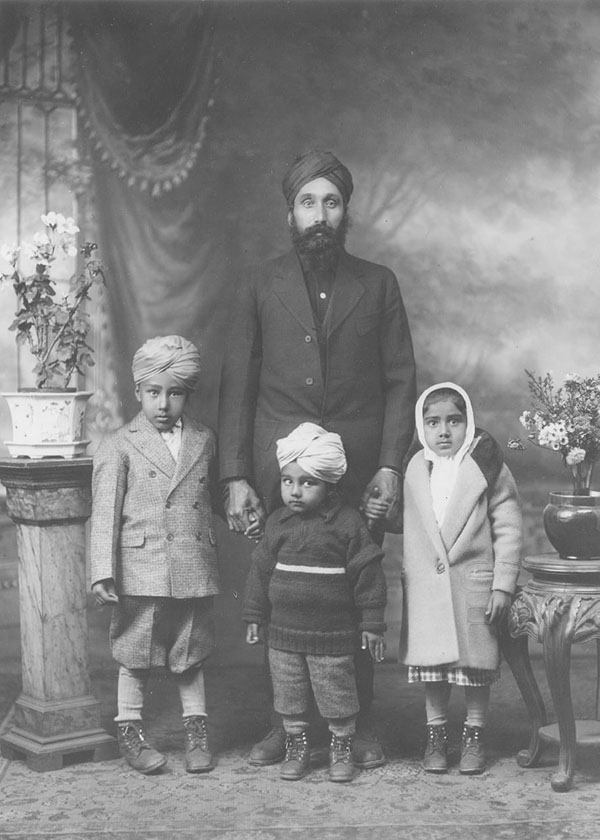
Caption: Abbotsford's Giani Naranjan Singh Thauli with three of his children.
The Canadian government changed the rules so Asian immigrants could apply to bring their wives and children to Canada. Before this, many men in Abbotsford worked for years without seeing their families. Even after the rule change, it often took a long time for families to reunite.
(Image 2005-033-001 courtesy of Delta Museum and Archives)
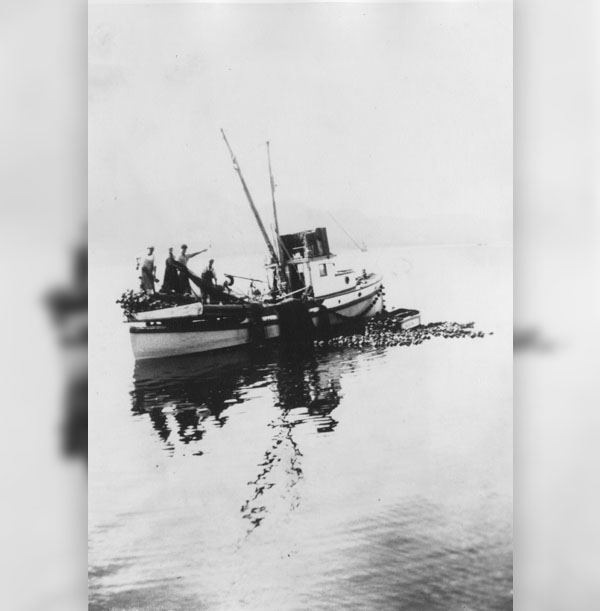
Caption: Japanese Canadian fishermen work on a fishing trawler.
After many years of low salmon returns, the Government banned all fishing on the Fraser River. Many Stó:lō people had to get other work picking berries, fruit, and other cash crops in Mission.
(Image 2001.04.138 courtesy of the Nikkei National Museum & Cultural Centre)
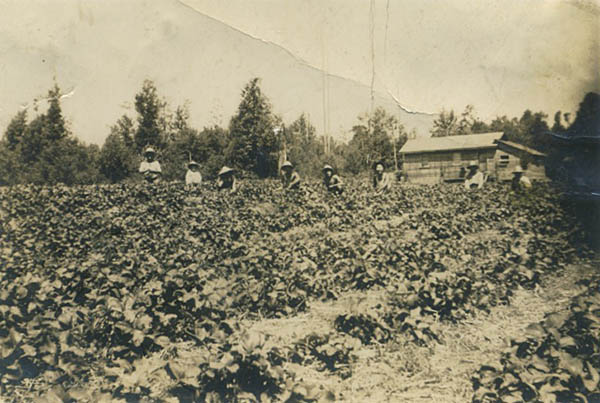
Caption: Pickers harvest berries at the Saito family farm.
Living mostly on his own in the Clayburn area, Riichi Sasaki built up his farm without the support that other Japanese Canadian communities had. In 1920, he returned from Japan with his new wife, Misako. He cleared several acres of land and built their home. Together, they became the first family to grow strawberries in Clayburn. Strawberries later became an important crop for many Japanese Canadian farmers in the Fraser Valley. The Sasakis brought their early berry harvests to Mission by horse and cart along rough, bumpy trails.
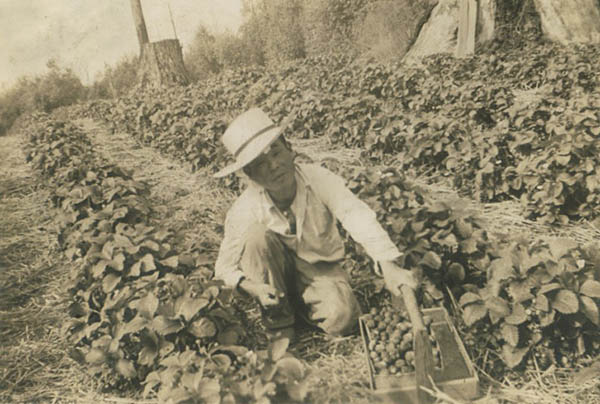
Caption: Tominosuke Saito picks strawberries in Matsqui.
Farming was already an appealing choice for Japanese Canadians, but more people turned to it because racist government rules pushed them out of other jobs. In the 1920s, the government gave far fewer fishing licences to Japanese Canadian fishermen, and many lost their jobs. Many of these workers moved to the Fraser Valley, where Japanese Canadian farming communities were already established and helped them get started as berry farmers.
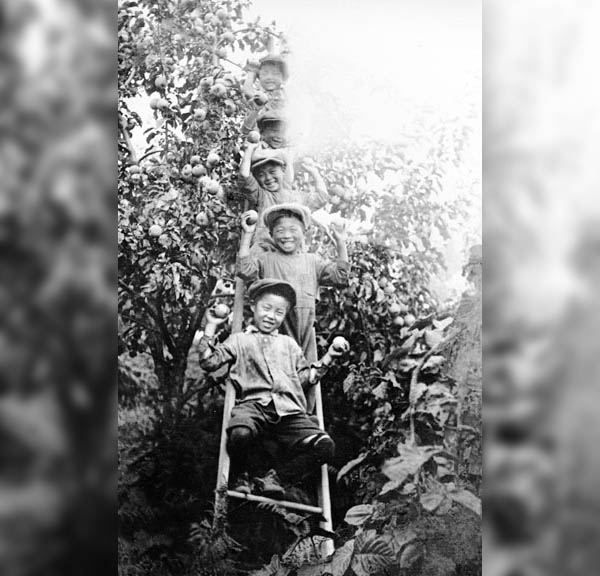
Caption: Boys in Mission BC proudly display their pickings, circa 1926.
In Mission, Issei farmer Bunjiro Sakon created new types of crops, like autumn strawberries and winter rhubarb. These crops could grow for much longer than usual, so farmers in the Fraser Valley, including Abbotsford, could keep harvesting and earning money for more months of the year. Local farming associations called Nokai worked together, taking turns growing different crops. This helped make sure there were enough crops for everyone to sell and that all families could earn a steady living.
(Image 2010.23.2.4.700 courtesy of the Nikkei National Museum & Cultural Centre)
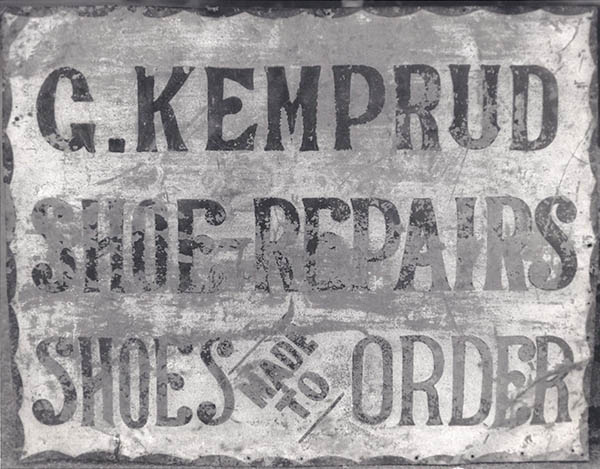
Caption: Sign for G. Kemprud's Shoe Repairs, a Matsqui business from the early 1900s.
The 1920s brought new businesses and forms of entertainment to the community. Scandinavians opened the first restaurant and an ice cream shop in Matsqui. The Matsqui Hotel also became an important place where different services were located, including a dressmaking shop, a pool hall, and public baths.
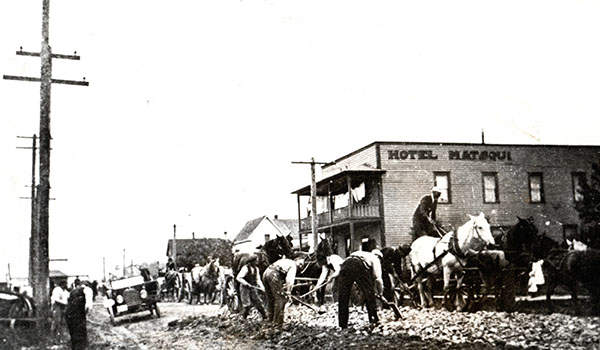
Caption: Men grading the road outside Hotel Matsqui, circa 1935.
By the 1930s the children of Scandinavian settlers felt Canadian, but they were still proud of their family background. Even if they were born in Canada, many still called themselves Swedish or Norwegian. During the Great Depression, many Scandinavian men worked paving roads in Abbotsford, which helped support their families with important income. Immigration from Scandinavia also slowed down during this time.
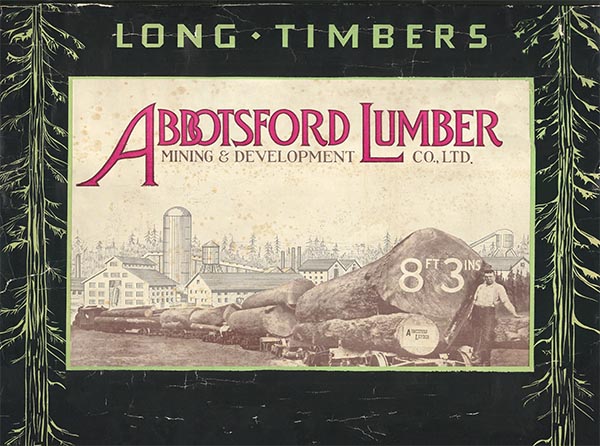
Caption: Advertisement for the Abbotsford Lumber Mining & Development Company, circa 1919 to 1928.
The lumber mill on Mill Lake expanded, and business was strong. In 1924, the mill closed for six weeks to upgrade its machines so it could process even more lumber. That year was a record year, with 275 workers and millions of feet of lumber produced.
(Image 85.41.1099 from Heritage Abbotsford Society)
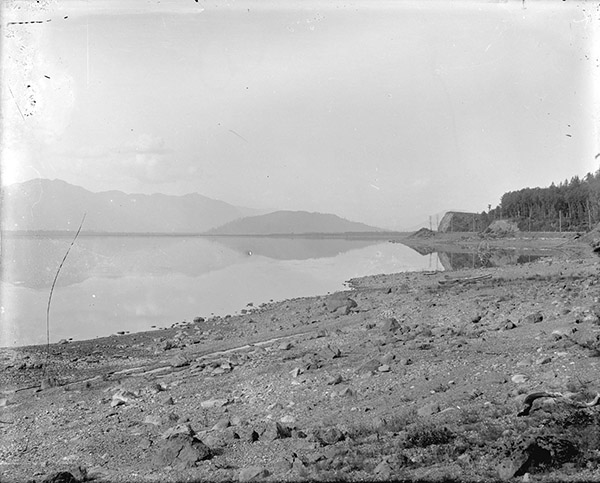
Caption: Sumas lake before it was drained, circa 1913.
In 1922, the provincial government formally decided to drain Sumas Lake, giving the contract to the Marsh Construction Company. By 1926 the work was completed, allowing farmers to settle the new Sumas prairie. The loss of the lake was devastating to the Semá:th people, whose original reserve was largely the lake itself. It was a source of food and a way of life, and it was a habitat for many birds, animals, and fish. The Stó:lō people were not consulted on the project, and the Semá:th were not compensated.
(Image LGN 1144 courtesy of City of Vancouver Archives)
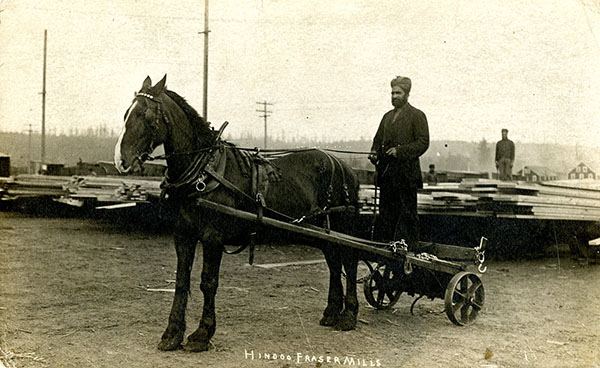
Caption: Millworker with a horse and cart at the Fraser Mills Lumberyard.
By 1924, most South Asian people living in B.C. worked in lumber mills. Out of about 680 South Asians in the province, around 609 were mill workers.
(Image MH.2011.3.21 courtesy of City of Coquitlam Archives)
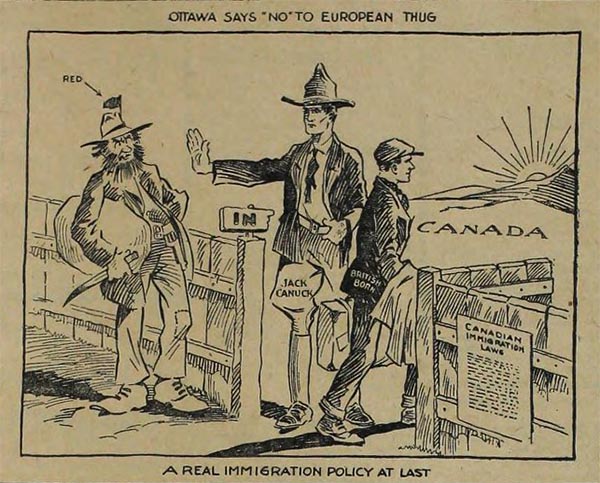
Caption: Anti-immigration cartoon printed in the local ASM News, 1922.
Under pressure from B.C. politicians and anti-Asian racists, Canada asked Japan to limit immigration even further. The new agreement allowed only 150 people per year, including women and children. In order to bring in skilled workers under these strict rules, Japanese Canadian communities together chose candidates, often from their home villages, and asked the Japanese consulate to approve them. Sponsored workers had to stay on the farms that sponsored them for at least three years.
(Image courtesy of the Abbotsford, Sumas and Matsqui News Archive)
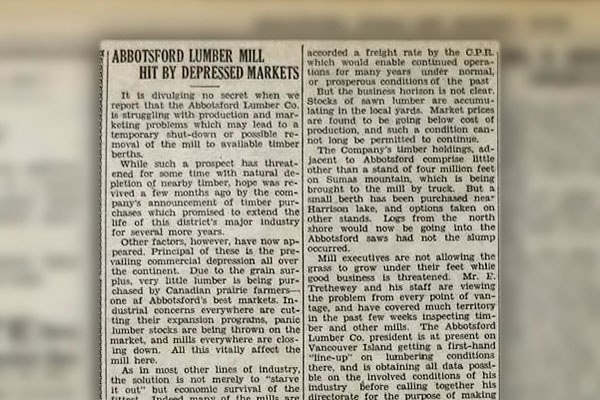
Caption: Article about the Abbotsford Lumber Company from the ASM News, circa 1930.
By 1928, the Abbotsford Lumber Company was in decline. Most of the nearby trees had already been cut, and the Great Depression made lumber less in demand. Because of pressure from locals and fewer jobs, the company fired 40–50 workers who were of South Asian, Chinese, and Japanese backgrounds—a racist layoff meant to keep jobs for white European workers. By the mid-1930s, the Abbotsford mill closed, logging stopped, and the company switched to selling products in stores instead.
(Image courtesy of the Abbotsford, Sumas and Matsqui News Archive)
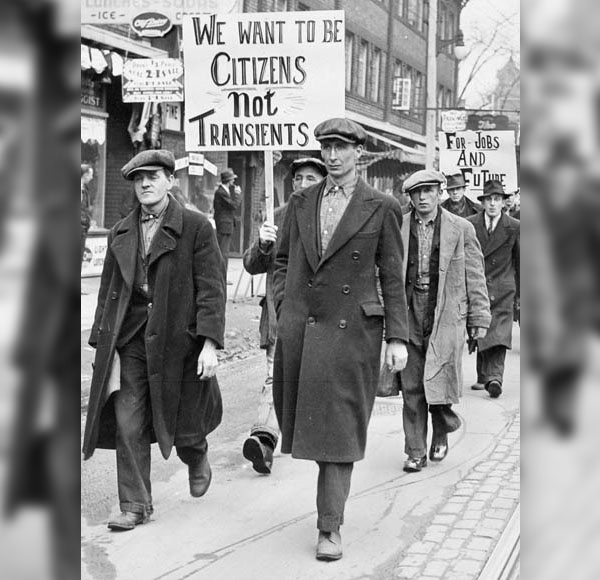
Caption: Out of work men protest during the Great Depression.
During the Great Depression, the Fraser Valley was protected from the worst effects of the Dust Bowl because of its climate. However, the collapse of the lumber industry and rising unemployment caused anxiety among British settlers. Many felt threatened by new migrants who they believed would compete for jobs and land.
(Image C-029397 courtesy of Library and Archives Canada)
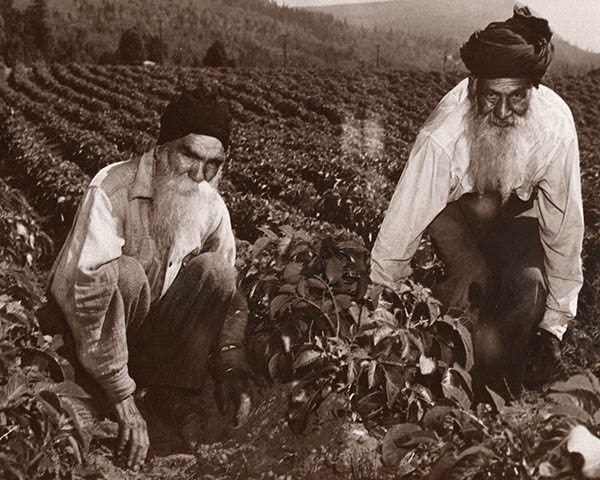
Caption: Jassa and Munsha Singh tend a potato crop on Sunder Singh Thandi's farm, 1953.
During the 1930s, many South Asian immigrants arrived in Canada seeking work after facing hardship and limited opportunities in Punjab. Many immigrants worked in lumber mills for very low pay. As mills closed and jobs became scarce during the Great Depression, some families used their earnings to buy land. They became farmers, helping their communities settle permanently in the Fraser Valley.
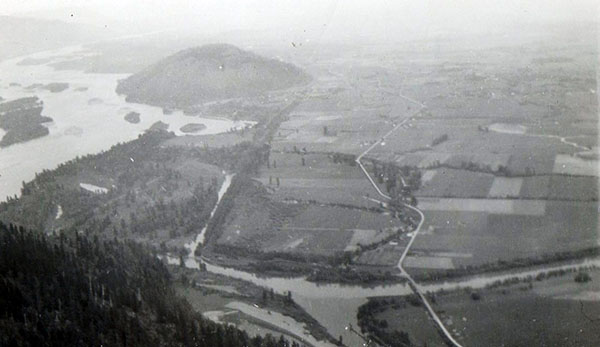
Caption: Aerial view from Sumas Mountain showing the Interprovincial highway running east to west over the Vedder Canal, circa 1940s.
In 1931, the first part of the Trans-Canada Highway in the Fraser Valley opened on Sumas Prairie. By 1941, the route from Clearbrook to Vancouver was complete. Trucking companies—mostly owned by white settlers at first—began moving goods by road. This made the railways less important to the local economy.
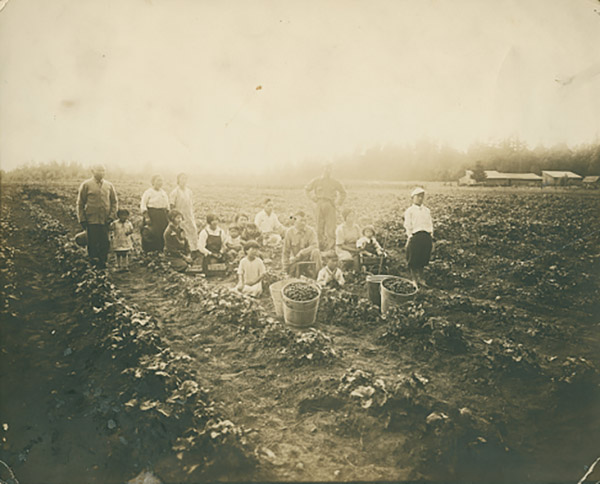
Caption: The Haraga Family's Strawberry Farm in Abbotsford prior to 1927.
By 1934, Japanese Canadian farmers owned 63% of the Fraser Valley’s farmland. Their careful and hardworking way of farming made them very successful in growing small fruits. At the time, a government inspector estimated that over 85% of the berries in the Fraser Valley came from their farms. This number probably grew even more in the years before the war.
(Image 2001.28.2.8.3 courtesy of the Nikkei National Museum & Cultural Centre)
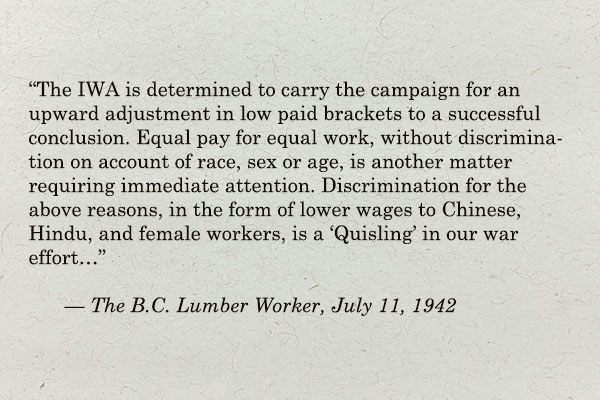
Because they were treated unfairly and did not have full rights as citizens, South Asian workers in the Fraser Valley worked together and raised money to support the fight for equality on a national level. South Asian workers were also on the front lines of the local International Woodworkers of America-Canada unionization effort, and fought successfully for better living conditions and equal pay for all lumber workers in the early 1940s.
(Quote taken from Page 5 of The B.C. Lumber Worker, Vol. XI, No. 13, July 11, 1942)
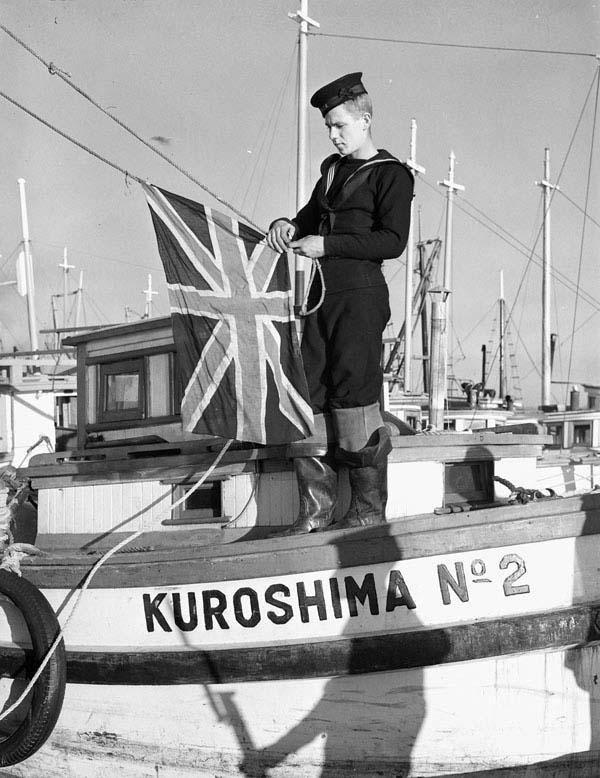
Caption: Sailor attaches a British flag to a seized Japanese Canadian fishing boat, 1941.
On December 7, Japan attacked Pearl Harbor. Canada quickly declared war on Japan, which made long-standing racism against Japanese Canadians in British Columbia worse. People became even angrier after Hong Kong fell and news spread about Japanese attacks on Canadian soldiers. Fears grew as Japan advanced quickly across the Pacific. The morning after the attack, the Canadian government began targeting Japanese Canadians. They took away fishing boats, closed Japanese-language newspapers, and told the police to arrest people they believed to be a threat.
(Image PA-170513 courtesy of Library and Archives Canada)
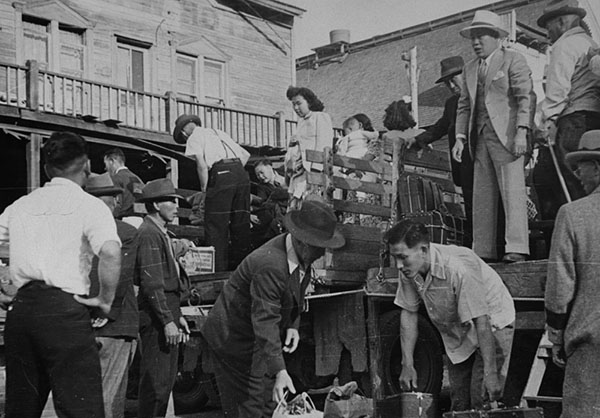
Caption: Japanese Canadians taken from the coast of BC arrive at an internment camp in Slocan, 1942.
The War Measures Act was put into effect, making coastal British Columbia a “protected area.” The government forcibly removed Japanese Canadians from the Fraser Valley, even those who were born in Canada. Families were separated—some were sent to internment camps, while others were sent to farms in the B.C. interior, Alberta, or Manitoba. The Japanese Canadian communities in Abbotsford were destroyed in just a few weeks, and by 1944, the local berry farming industry had completely collapsed.
(Image C-047396 courtesy of Library and Archives Canada)
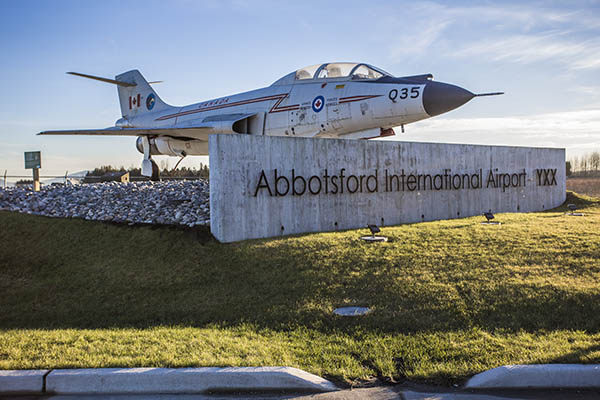
Caption: Entrance to the Abbotsford International Airport.
During World War II, an airport was built in Abbotsford to help defend the west coast. It opened on July 14, 1943, and became Canada’s biggest military airport, with more than forty buildings. The Royal Canadian Air Force Station closed in 1945, and the airport became civilian-run in 1958. In 1997, the City of Abbotsford bought it from the federal government, and it still operates today as Abbotsford International Airport.
(Image by YXXOps, CC BY-SA 4.0, via Wikimedia Commons)
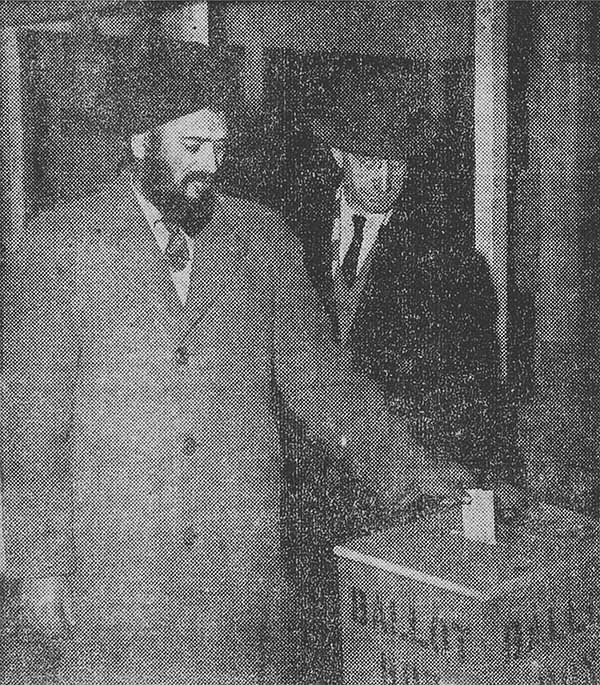
Caption: Mahinder S. Beadall, believed to be the first South Asian man to vote in Canada, casts his ballot.
After decades of advocacy and work in forestry and agriculture without full rights, South Asian labourers finally gained the right to vote, own land, and become Canadian citizens.
(Image 2021_05_002 courtesy of the South Asian Canadian Digital Archive)
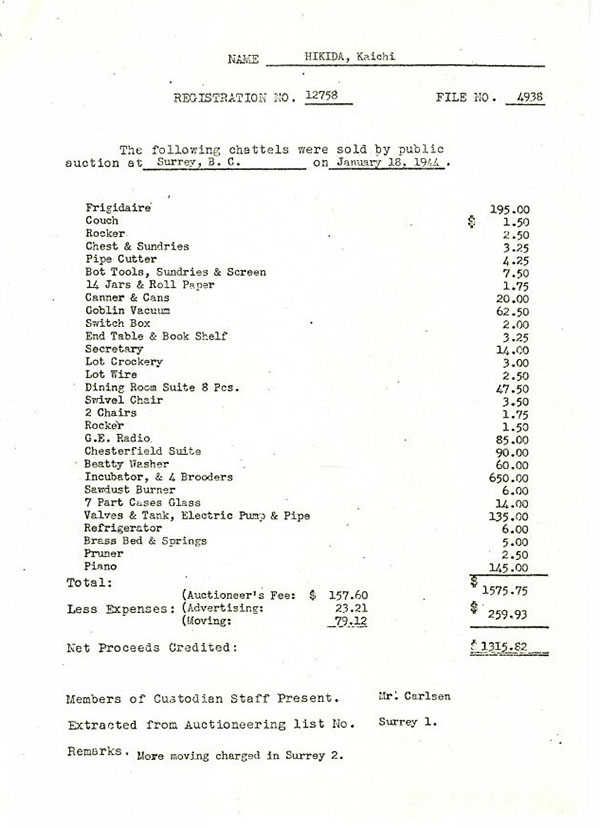
Caption: List of Kaichi Hikida's property put up for public auction after being seized by the Government during internment.
After the war, restrictions on Japanese Canadians were lifted, but very few came back to the Fraser Valley. Almost 4,000 had been sent to Japan, even though many had never lived there. Those who stayed in Canada had nothing to return to. Their belongings had been sold at auctions, and their homes and land had been sold, mostly to returning war veterans through the Veteran Lands Act.
(Image 2018.16.1.40.45 courtesy of the Nikkei National Museum & Cultural Centre)
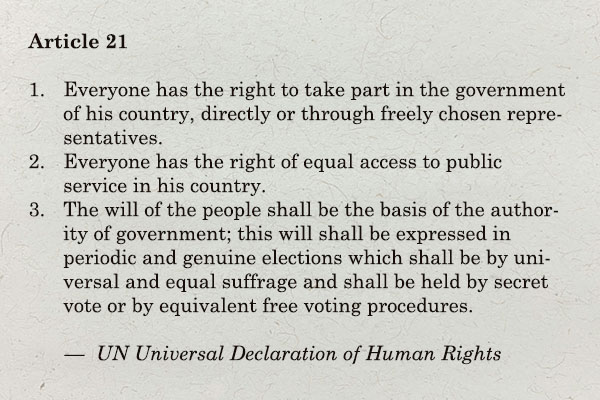
Canada signed on to the United Nations' Universal Declaration of Human Rights. Following this, the B.C. government finally allowed Indigenous people the right to vote. In 1951 the Indian Act was amended so that Indigenous people could vote federally without giving up their Indigenous status.
(Quote taken from Article 21 of the UN Universal Declaration of Human Rights)
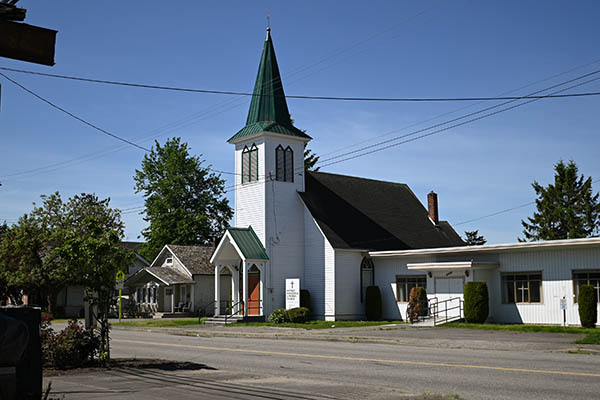
Caption: Matsqui Lutheran Church.
By the mid-20th century, Scandinavian settlers had become an important part of Abbotsford’s identity. Their farms, businesses, buildings, and traditions helped shape the growth of early Abbotsford. Their legacy continued not only in the buildings and the community organizations they created, but also in the families who remained in the area for generations.
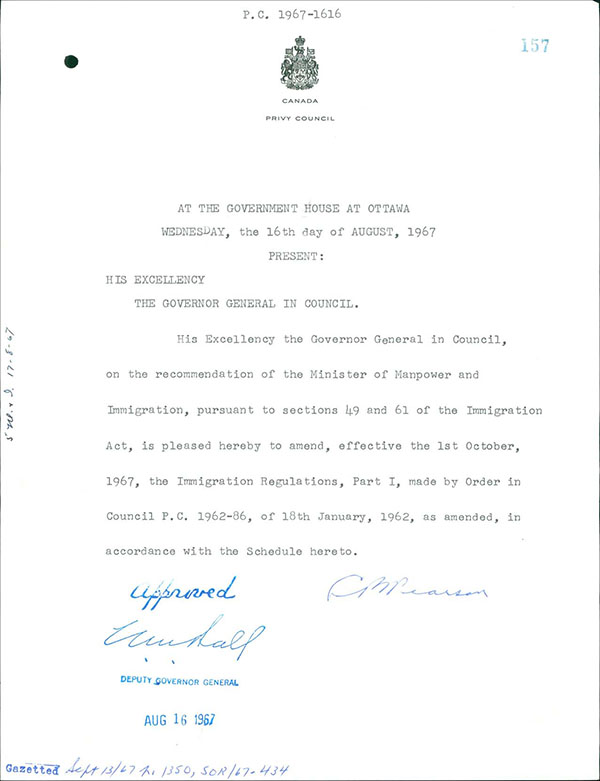
Caption: Order in Council amending immigration policy, 1967.
In 1962, Canada ended its system that set limits based on a person’s country of origin. In 1967, a new point system was created to decide who could immigrate, attempting to make Canada’s immigration rules fairer and less racist.
("Immigration Act, Immigration Regulations, Part 1, Amended" courtesy of Library and Archives Canada via the Canadian Museum of Immigration at Pier 21)
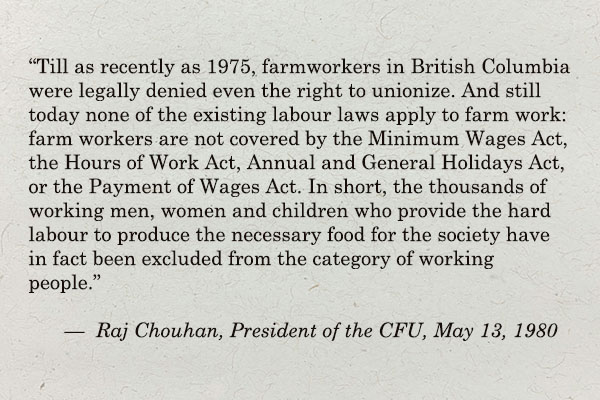
On April 6, 1980, South Asian immigrants in B.C. helped start the Canadian Farmworkers Union (CFU). Many farm workers faced long hours, dangerous work, and little protection under the law. By organizing together, CFU members fought for fair pay, safer workplaces, and basic rights.
(Quote taken from Raj Chouhan's Speech at BC Conference of the United Church of Canada in Victoria)
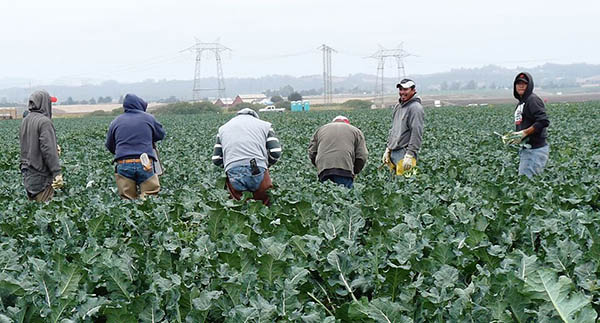
Caption: Migrant farmworkers pick crops.
By the early 2000s, there were fewer farm workers in B.C. Many former South Asian farm workers were getting older or starting their own businesses, and fewer Canadians wanted to do hard, low-paid farm jobs. Instead of paying higher wages, farms began hiring temporary workers from other countries to help with planting and harvesting and keep farms running.
(Image by PAC55, CC BY-SA 4.0, via Wikimedia Commons)
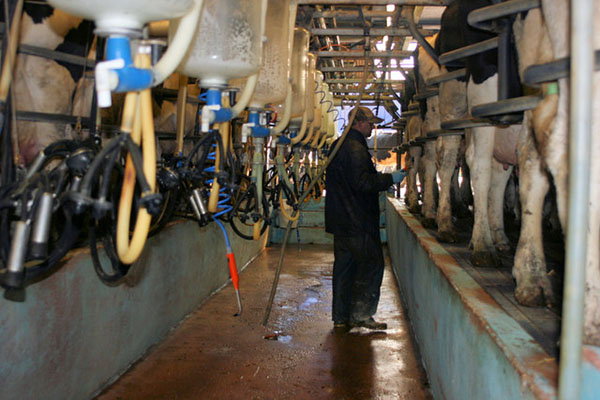
Caption: Farmer runs milking machines on a dairy farm.
As local farm workers became harder to find, Canadian farms used programs to bring in migrant workers. The Temporary Foreign Worker Program began in 2002, and the Seasonal Agricultural Workers Program expanded to B.C. in 2004. These programs brought in workers for short-term contracts to fill labour shortages.
(Image by Nick Chipchase, CC BY-SA 2.0, via Wikimedia Commons)